Set screws are an important fastener that is used frequently but often overlooked. Although small in size and without an exposed head, they play an irreplaceable role in the fixing of shaft parts, preventing relative slippage, and precise positioning.Commonly used materials include grade 12.9 alloy steel blackened, stainless steel and brass. With a variety of screw tail designs, including flat, tapered, convex and concave ends, set screws are easy to use and have a wide range of applications.
This article will provide a systematic explanation of set screws to help technical or purchasing personnel make a more professional and reliable choice.
What Is a Set Screw?
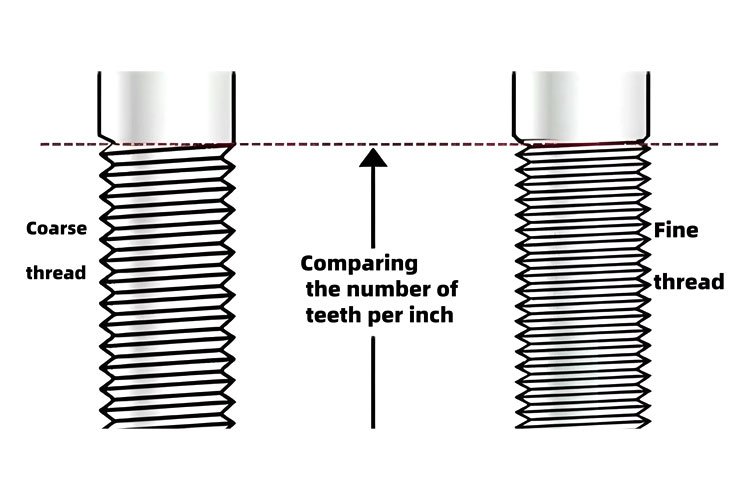
A set screw is also known as a headless screw, grub screw or blind screw. It has no head and is a fastener consisting entirely of a threaded rod. The whole is cylindrical, the head and thread diameter is the same. After installation, the screw is completely or partially immersed in the connected parts, not exposed, aesthetic appearance.
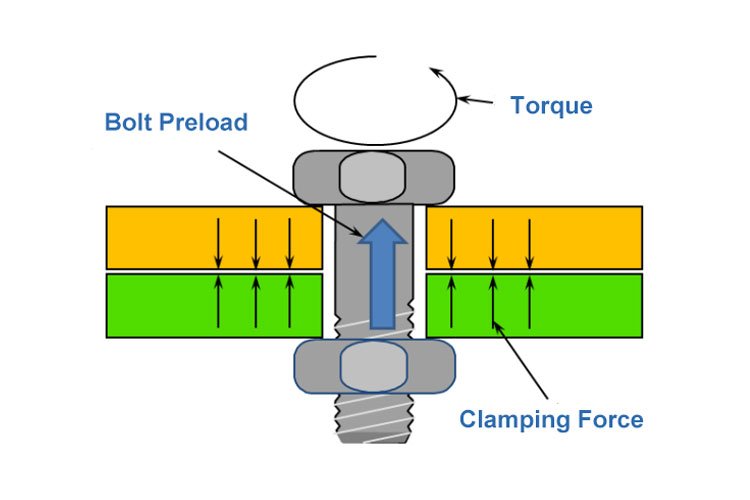
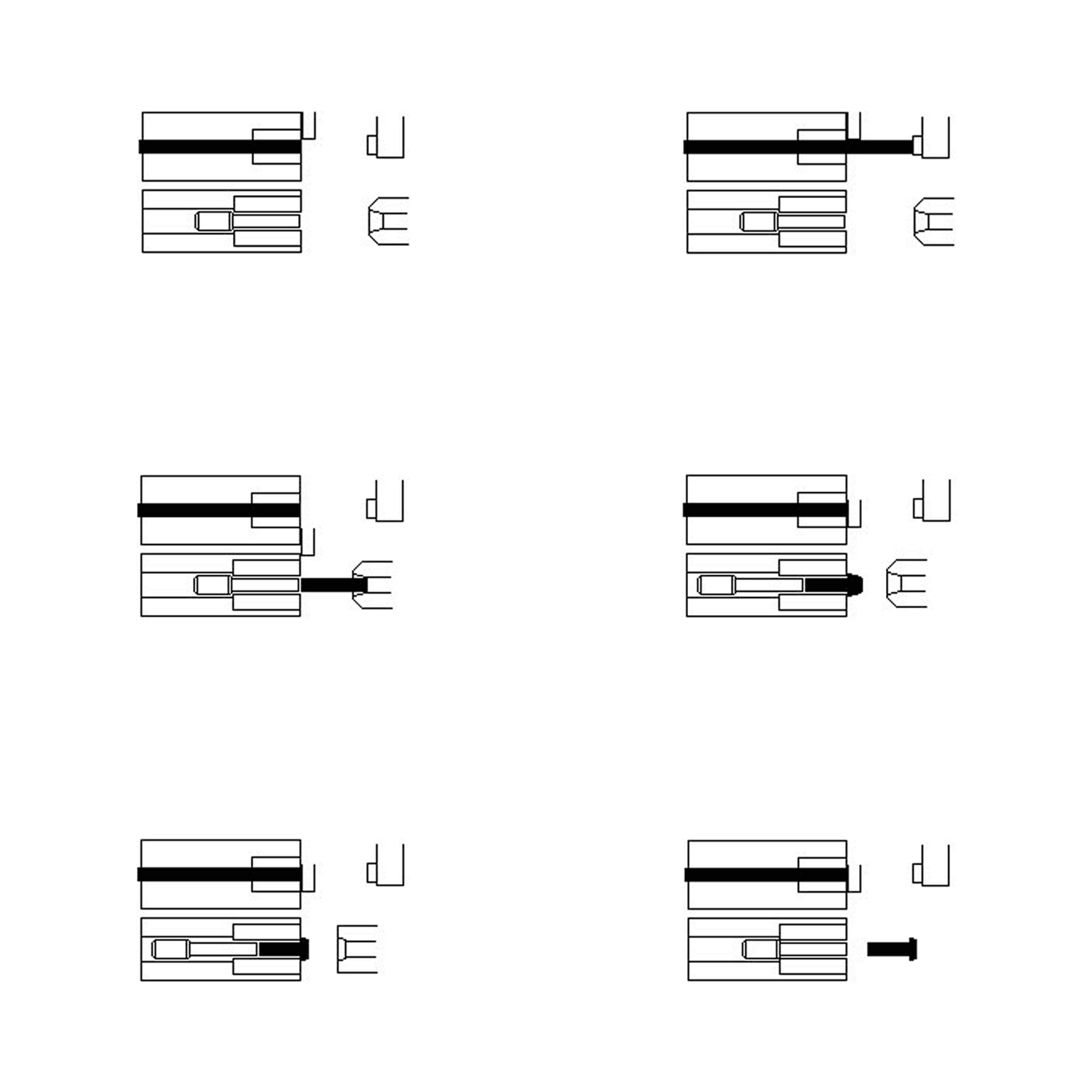
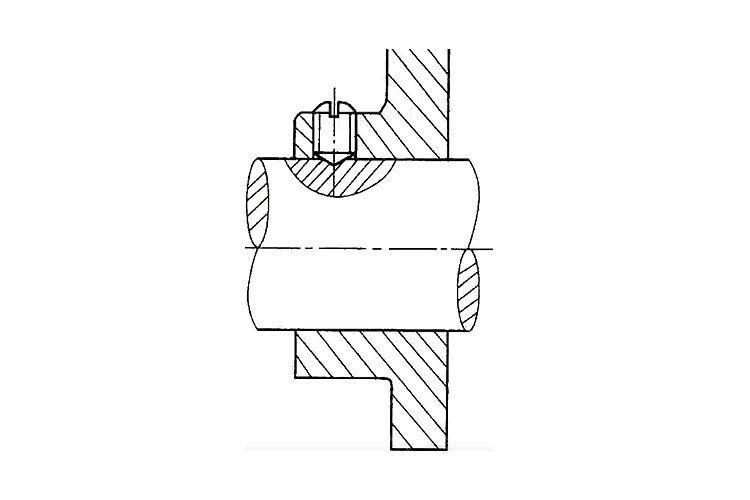
Set screws are usually used to fix parts (such as gears, bushings, pulleys) in shafts or holes to prevent them from axial displacement or rotational slippage during operation. The role is equivalent to that of a dowel pin.Set screws are mainly used in connections to transmit small forces and torques.
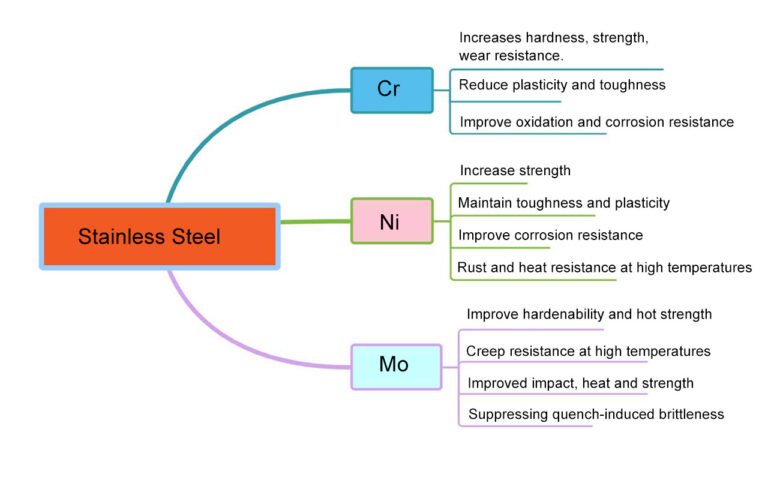
Materials and Finishes
| Materials | Finishes |
|---|---|
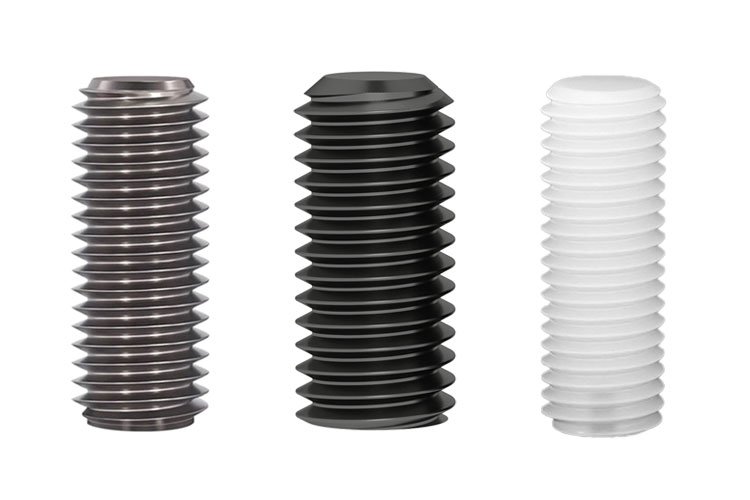
| Carbon Steel (4.8 / 8.8 / 12.9) Alloy Steel Stainless Steel (304 / 316) Titanium Brass Nylon | Black Oxide Blue and white zinc, colored zinc Dacromet Nickel plated Chrome plated |
Types of Set Screws
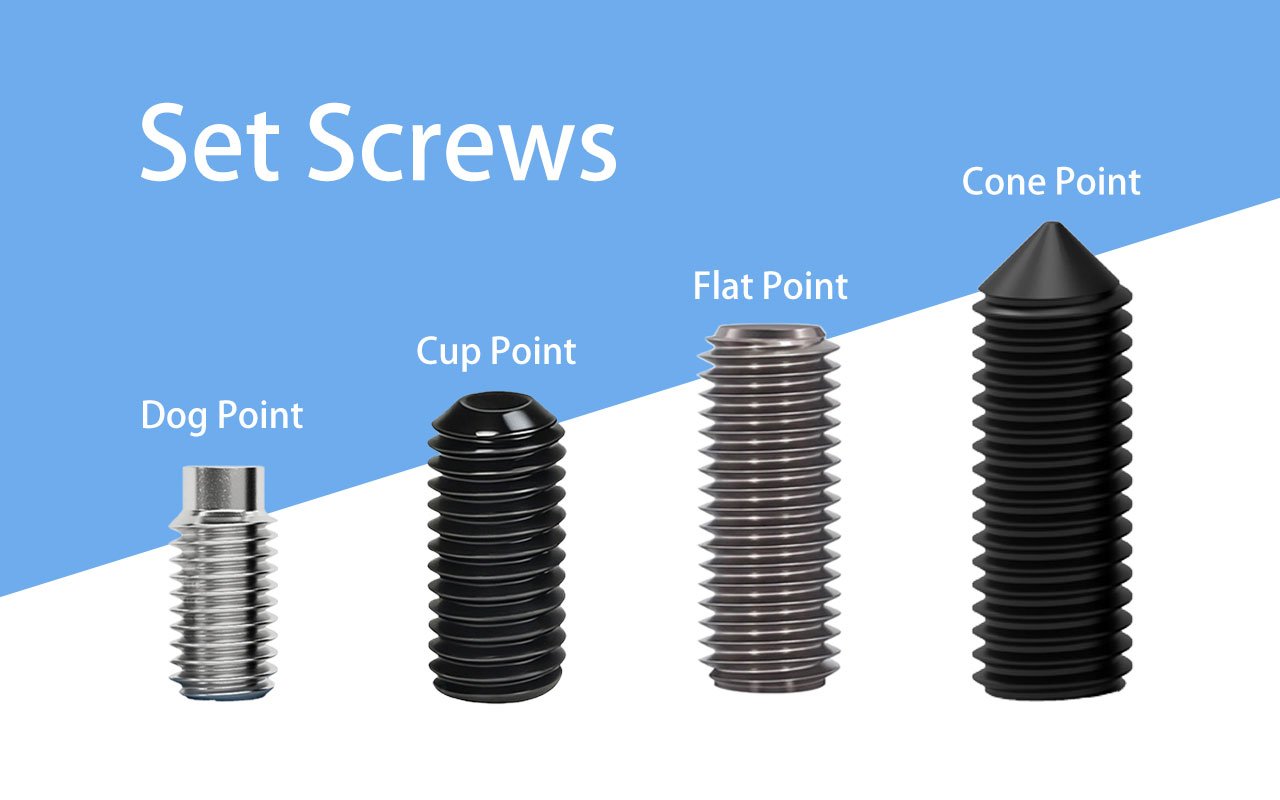
Set screws are most commonly available with cone-point, flat-point, cup-point, or cylindrical designs, depending on specific application requirements.
Flat Point Set Screw
Flat point design, large contact area, not easy to damage the shaft surface. It can be used for parts with high hardness, and the tightening surface should be flat.
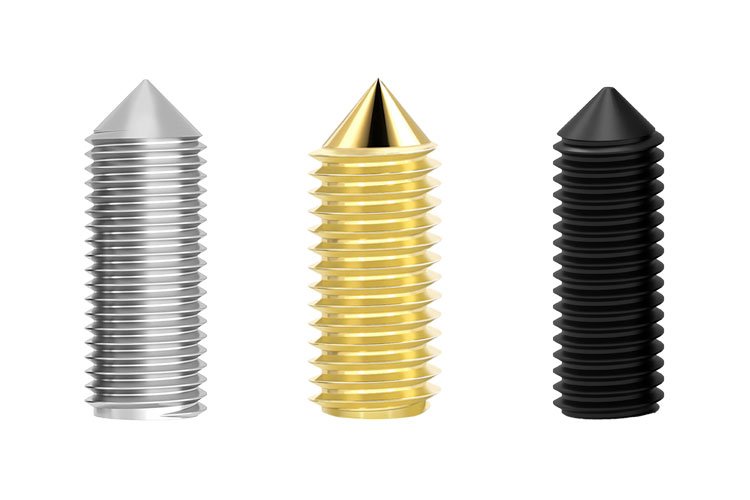
Cone Point Set Screw
This type of screw has a pointed end, which has a strong anti-loosening ability and is suitable for use on less strong machine parts, but is not suitable for repeated disassembly.
Cup Point Set Screw
Cup Point Set Screws are a common type with a concave end that provides a high degree of non-slip capability and are used on hardened or frequently repositioned machine parts.

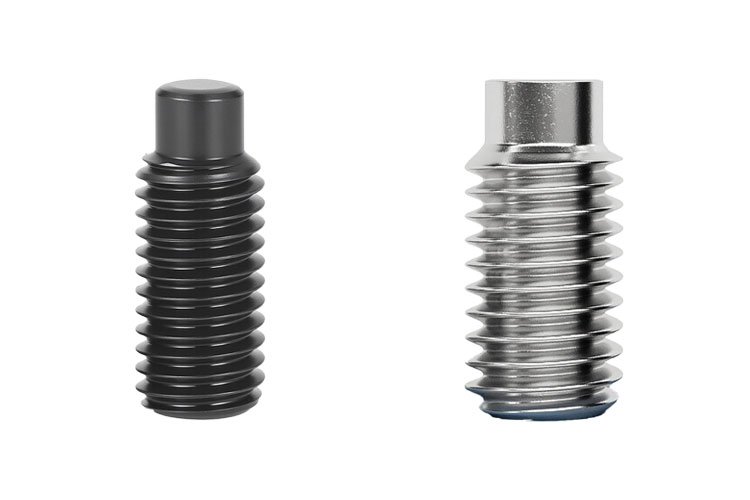
Dog Point Set Screw
Cylindrical head set screws, also called DIN915 Dog point set screws, have a cylindrical head raised at the end.
Used for frequent adjustments or for fixing parts on pipe shafts (thin-walled parts). Cylindrical end into the hole on the pipe shaft, by the shear force can transfer a larger load, the use of such screws should be prevented from loosening the device.
Special Types of Set Screws
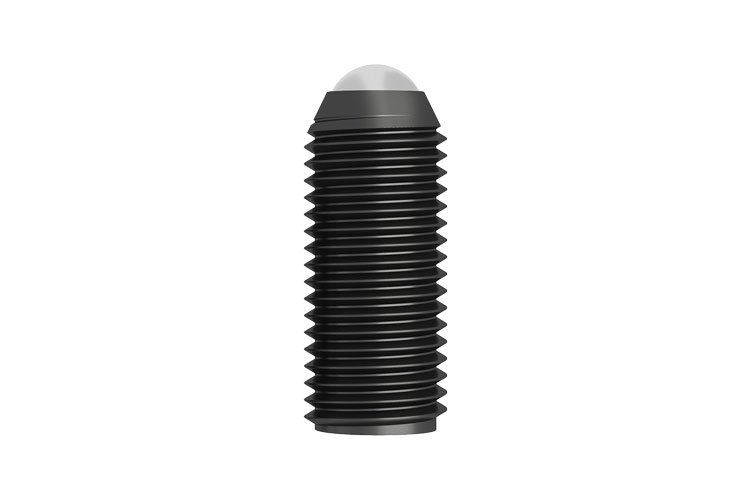
Set Screw With Ball
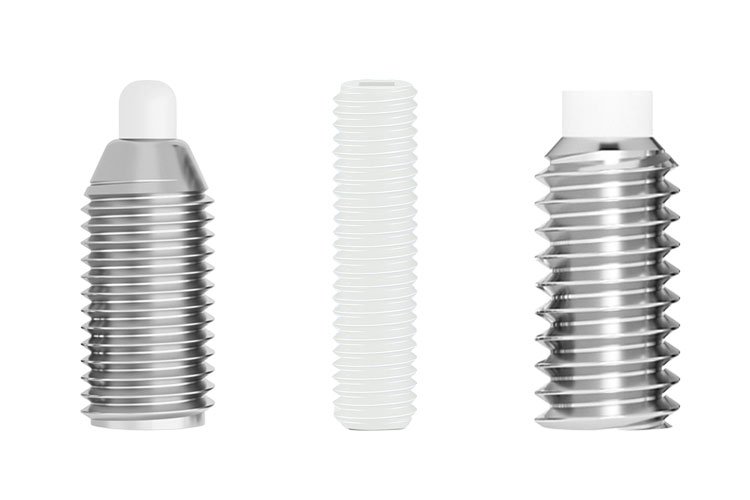
Nylon Grub Screws
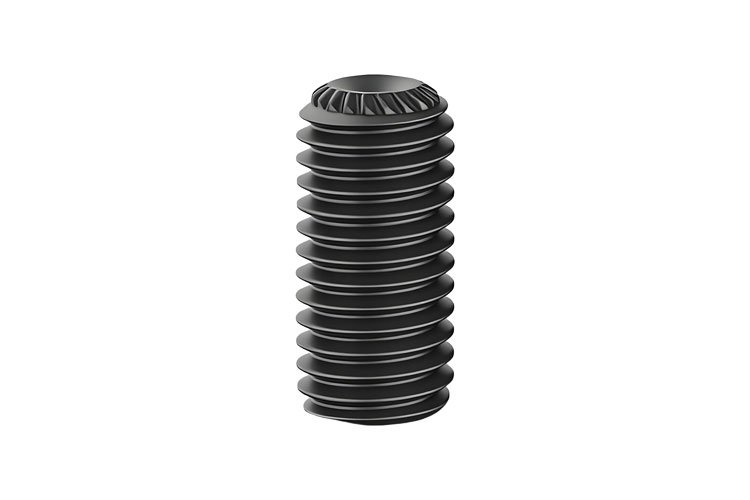
Knurled Cup Set Screw
Set Screw Drive Types
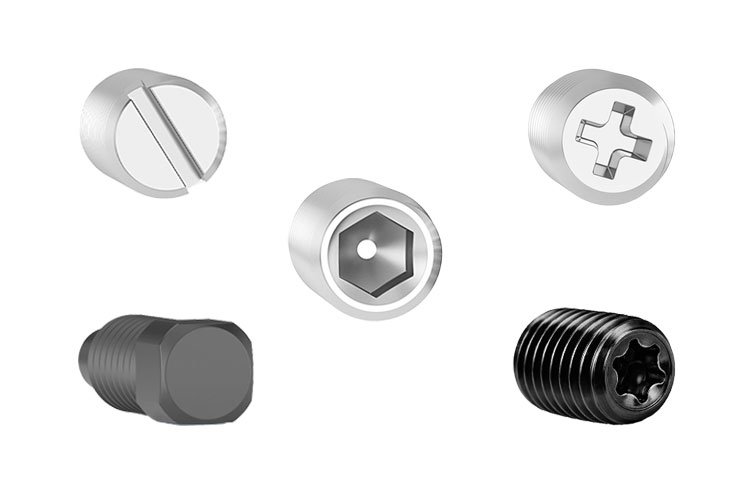
There are various types of drive for set screws.
- Hex Socket: The most common type, easy to recess into parts, and widely used.
- Slotted: Traditional design, easy to recess into parts. Lower tightening force, and prone to loosening.
- Phillips: Cross-shaped, medium torque.
- Torx: High torque, good slip resistance.
- Square Head: Can be applied to a larger tightening torque, tightening force, not easy to slip the wire, but the head size is large, not convenient to embedded in the parts, not safe, especially the moving parts should not be used.
Standard for Set Screws
- DIN 913 Hexagon Socket Set Screws with Flat Point
- DIN 914 Hexagon Socket Set Screws with Cone Point
- DIN 915 Hexagon Socket Set Screws with Dog Point
- DIN 916 Hexagon Socket Set Screws with Cup Point
- DIN 551 Slotted Set Screws with Flat Point
- DIN 553 Hexagon Socket Set Screws with Cone Point
- DIN 916k Hexagon Socket Set Screws with Knurled Cup Point
- ANSI 18.3 Hexagon Socket Set Screws with Flat Point
- ANSI 18.3 Hexagon Socket Set Screws with Cup Point, Us System
- GB 71 Slotted Set Screws with Cone Point
- GB 73 Slotted Set Screws with Flat Point
- GB 77 Hexagon Socket Set Screws with Flat Point
- GB 78 Hexagon Socket Set Screws with Cone Point
- US Hexagon Socket Set Screws with Knurled Cup Point
- Ball Screws
Applications
When used, the set screw is screwed into the screw hole of the part to be fixed, and the end of the screw is pressed against the surface of another part, i.e., the former part is fixed on the latter part. The compression force of the screw is the smallest for slotted screws, the largest for square head screws, and the medium for hexagon socket head screws.
Slotted and hexagon socket set screws are used on machine parts where the head of the screw is not allowed to be exposed.
Square head set screws are used on machine parts where the head of the screw is allowed to be exposed.
Cone point screws are suitable for machine parts with low strength; the sharp end can bite into the surface of the part.
Pointless cone point screws are suitable for machine parts with pits on the compression surface to increase the ability to transfer loads;
Flat point screws (compression surface should be flat) end smooth, after the top tightening does not damage the surface of the parts, for the need to frequently adjust the position of the connection, can only transfer small loads.
Cup end screws are suitable for greater hardness or often adjust the position of the machine parts.
Dog point (long cylindrical end) screws are used on tubular shafts (thin-walled parts), where the cylindrical end enters the bore of the tubular shaft to transmit a large load, but the screw should be used with a device to prevent it from coming loose.
Conclusion
Set screws with different head types, materials, and standards are suited for diverse operating conditions and industry requirements. Only by fully understanding their performance differences can one accurately select the appropriate set screw.
If you are seeking high-quality set screw products or require further technical support regarding selection, standard matching, materials, and surface treatments, feel free to contact us online anytime.