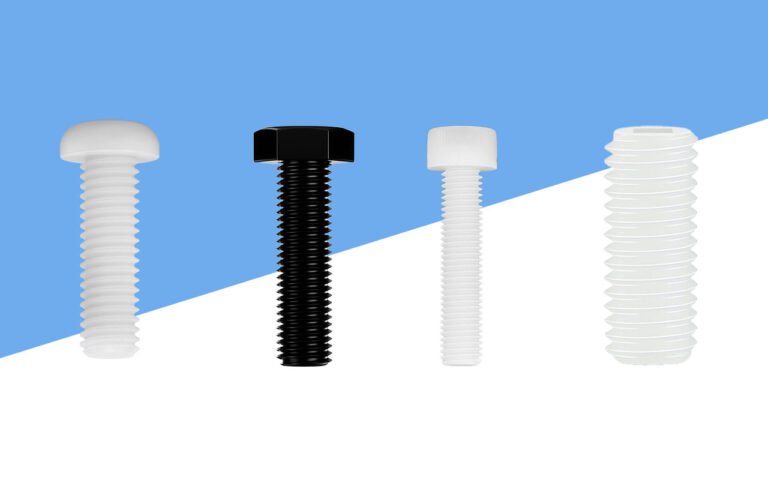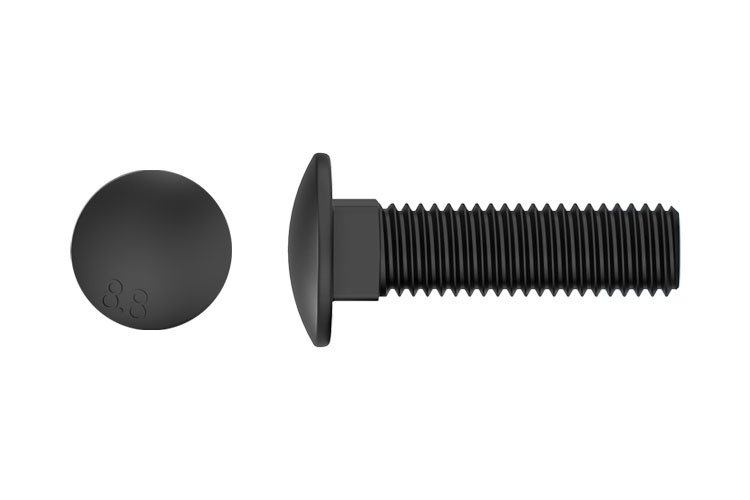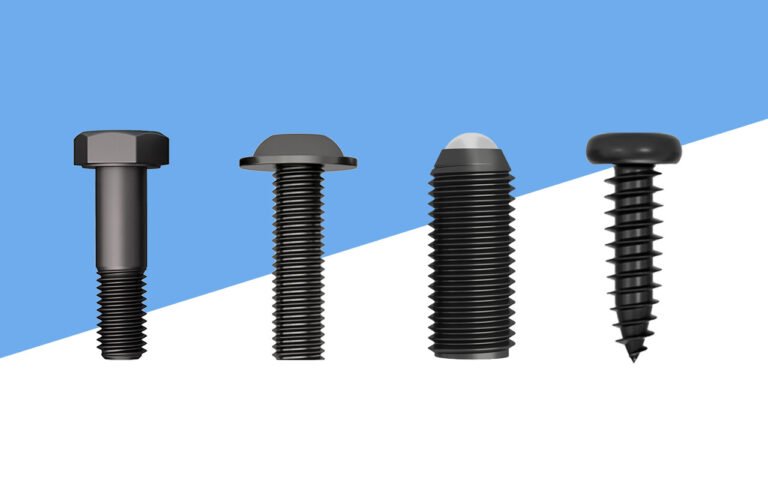
In the fastener industry, bolts and screws are the most commonly used. They both consist of a shank and a head, and their head shapes are similar, so they’re often confused.
Here, we will systematically talk about the differences between bolts and screws from the aspects of definition, structure, installation method, fastening method, and usage occasions.

Definition
Bolts are cylindrical, threaded fasteners that are paired with nuts. This connection is called a bolted connection or a detachable connection, primarily used to connect two or more parts with through-holes. They are suitable for structural fastening.
Screws, which generally do not require nuts, are fasteners with external threads that screw directly into workpieces (with or without threaded holes). They are used to secure one part directly to another and are commonly used on thin plates, housings, plastics, wood, and other materials.
Bolts vs. Nuts
| Item | Bolt | Screw |
|---|---|---|
| Interpretation | A fastener with external threads, usually used with a nut, to clamp two or more parts together. | A fastener with external threads that screws directly into a workpiece (with or without a threaded hole). |
| Matching nut | Generally, a nut (such as a hexagonal nut) is required to match. | Most do not require nuts and can be screwed in directly. |
Structural Differences
The structure of bolts and screws is composed of a head and a shank. There are many types of head shapes, mostly hexagonal, square, flange, etc., which are convenient for wrench operation. However, the hexagonal head of the bolt is more common and generally larger in size. The head of the bolt is not necessarily grooved. The screw shank is strictly cylindrical, mainly to facilitate the assembly of the nut.
The head of the screw usually has a groove or a hexagonal or torx socket for fastening. The screw is not only cylindrical, but also conical, pointed, etc.

| Item | Bolt | Screw |
|---|---|---|
| Head shape | Most of them are hexagonal heads, square heads, flange heads, etc., which are convenient for wrench operation. | Most of them are countersunk heads, round heads, pan heads, hexagon socket heads, self-tapping heads, etc. |
| Shank | Most are partially threaded (the shank part is used for positioning and bearing shear forces). | Most are fully threaded, which is convenient for self-tapping or screwing into threaded holes. |
Installation
Bolts are generally installed using a wrench, such as a hexagonal bolt + hexagonal nut + flat washer/spring washer.
Screws are installed with tools such as hexagonal wrenches and screwdrivers. Examples include self-tapping screws, machine screws, and wood screws.
Fastening
The bolts are fastened by fitting with nuts or screwing them directly into the processed bolt holes.
Screws can be used with nuts or screwed directly into holes. There are also self-tapping screws, which can be screwed directly into softer workpieces without having to machine the bolt hole first, such as wood screws.
| Item | Bolt connection | Screw connection |
|---|---|---|
| Bearer Type | Shear force + axial tension | Mainly axial tension |
| Structural connections | Steel structure, flange, equipment installation | Shell, chassis, plastic parts, wooden parts |
Common Standards
| Type | Standard |
|---|---|
| Bolt | DIN 933 hexagonal full-thread bolts, DIN 931 half-thread bolts, ISO 4017, ISO 4014 |
| Screw | DIN 7981 cross pan head tapping screws, DIN 912 hexagon socket head screws, DIN 965 countersunk head screws |
Uses
Bolted connections are generally removable and require minimal precision. They are suitable for connecting parts made of various materials and can withstand lateral loads.
Screws are more compact than bolts, but they cannot be disassembled frequently and have limited load capacity. They are primarily used for blind hole connections where disassembly is not common.
| Industry | Common bolts | Common screws |
|---|---|---|
| Building structure | Hexagonal bolts, anchor bolts | Self-tapping screws, self-drilling screws |
| Mechanical equipment | Flange bolts, studs | Hexagon socket screws, countersunk screws |
| Electronics and Electrical | — | Small machine screws, miniature self-tapping screws |
| Automotive and Aerospace | High-strength bolts (grade 10.9) | Special screws (with sealing ring) |
Conclusion
For threaded holes, use nuts and bolts; For self-drilling and self-tapping holes, use screws.
After reading the above points, do you understand the difference between bolts and screws?