Wood screws are a type of self-tapping screw with a coarse thread and a pointed head. Once a wood screw is screwed into a wooden material, it can be embedded very firmly. They are commonly used for wood chipboard, medium-density fiberboard, softwood, and hardwood.
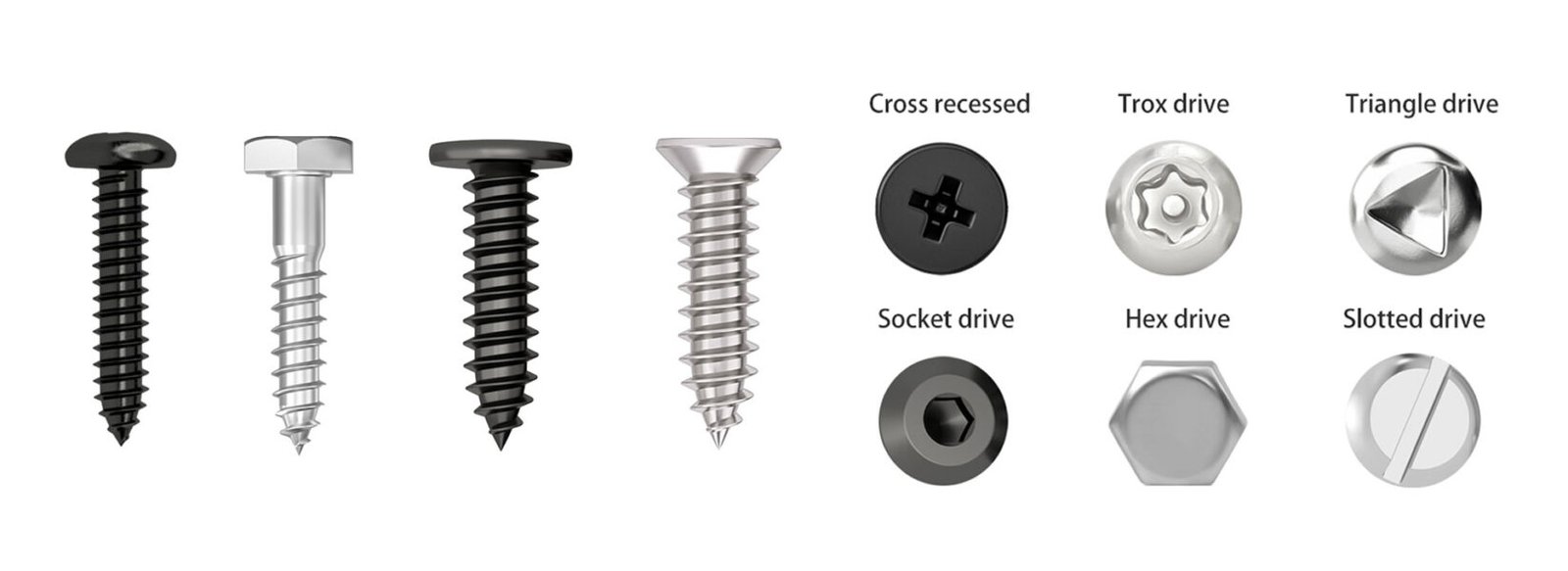
Characteristics of Wood Screws
- Strong Holding Power
- Pointed Tip
- Deep Coarse Thread
- Full / Partial Thread
- International Standards
- Various Drive Types
- Various Head Types
- Various Surface Finishes
Wood Screw Drive Types
Wood screw drive types include cross drive, slotted drive, square drive, star drive, triangle drive, internal hexagon drive, and external hexagon drive.
The type of drive slot determines which screwdriver or bit you need to use.
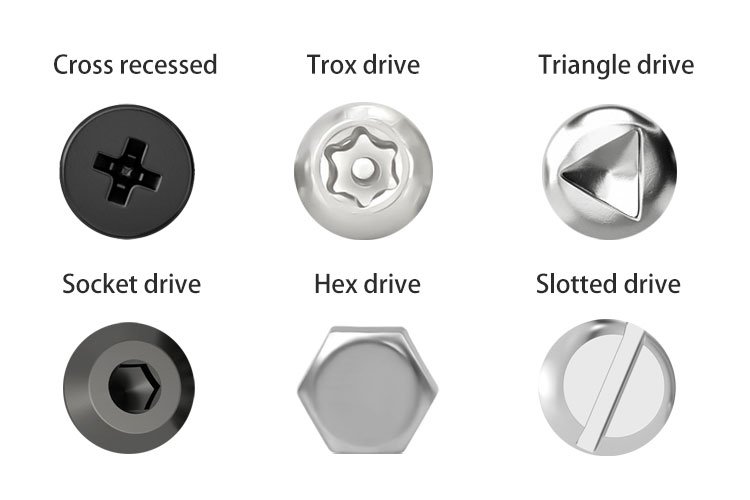
- Slotted Wood Screw
The simplest slot type is a straight line. It’s simple to manufacture and inexpensive. However, the screwdriver can easily slip out, damaging the screw, and torque transmission is poor. It’s now rarely used.
- Phillips Slotted Wood Screw
The head has cross slots. Compared to a slotted screwdriver, this prevents the screwdriver from slipping out and provides greater torque transmission.
- Trox Drive Wood Screw
The head has multiple symmetrical petal-shaped grooves. It can withstand very large torques and almost never slip, making it very suitable for power tools and high-strength fastening.
- Square Drive Wood Screw
The head is a square groove. This is common in some North American timber structures.
- Triangle Drive Wood Screw
The shape of the driving groove is an equilateral triangle, which is anti-disassembly and not easy to slip.
- Hexagonal Socket Wood Screw
Regular hexagonal groove, high torque, excellent anti-slip.
Wood Screw Head Types
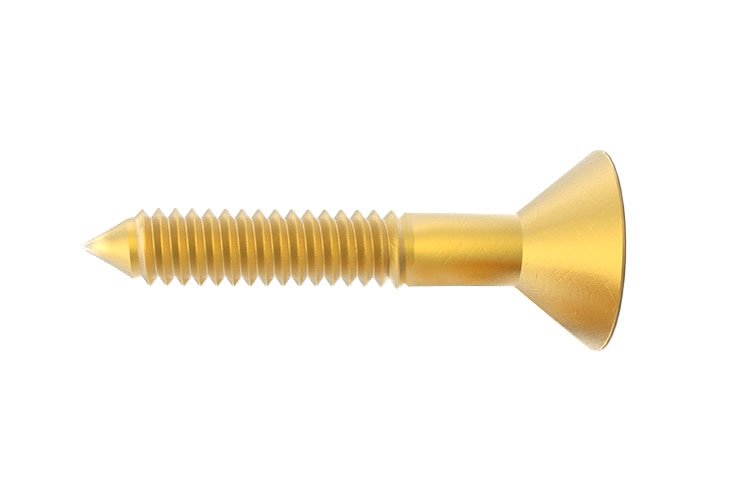
Countersunk wood screw
The head is conical in shape and can be fully embedded in pre-drilled countersink holes, flush with the surface of the workpiece, very aesthetically pleasing and with no protrusions.
Material: Brass, 316 stainless steel.
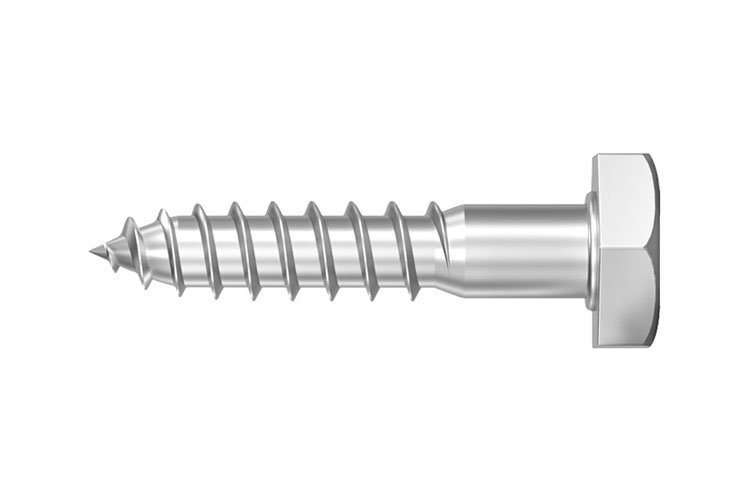
Hex head wood screw
The head is hexagonal, which can provide very large tightening torque and is not easy to slip. It can be tightened with a wrench or socket.
Material: Stainless steel, carbon steel.
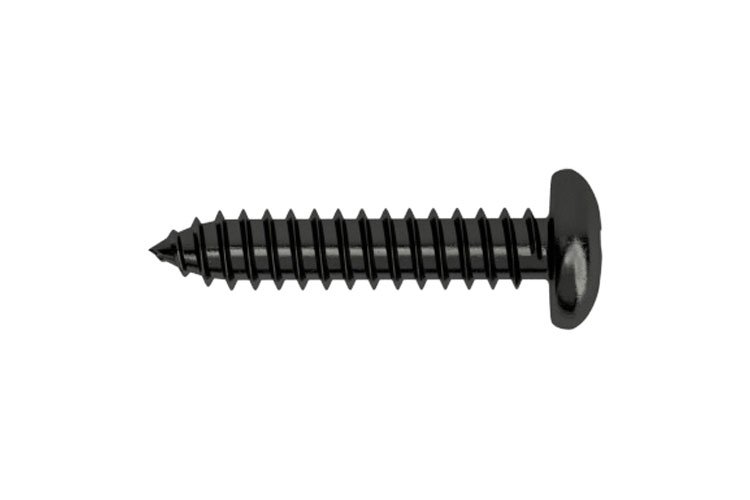
Pan head wood screw
Rounded edges, like a plate, with a large force surface.
Material: Aluminum.
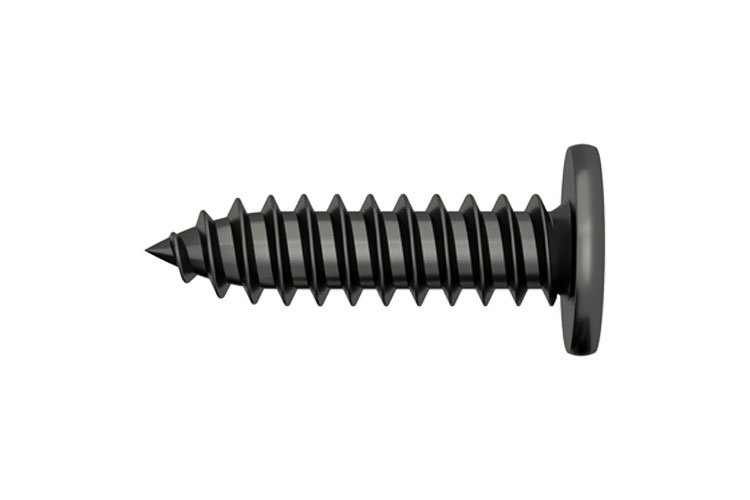
Flat top head wood screw
Unlike countersunk wood screws, its head is flat and disc-shaped, with no tapered transition at the bottom. It does not embed into the wood, but lies flat on the surface.
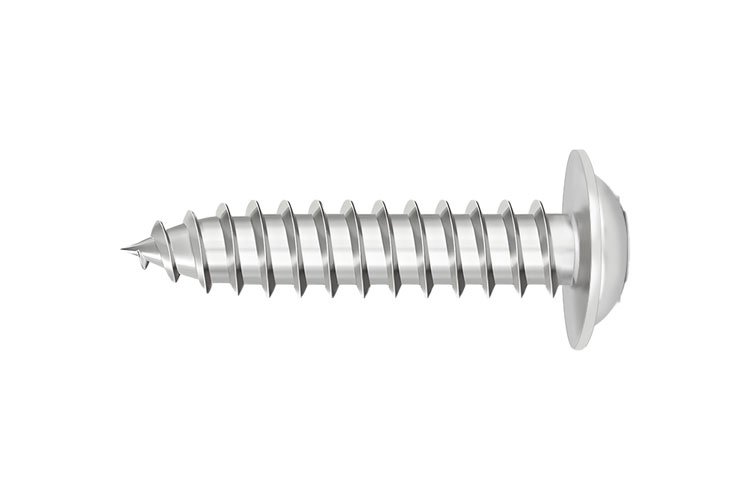
Round head wood screw with washer
The head is semicircular or mushroom-shaped, and some have a flange. After installation, the head protrudes from the surface of the workpiece. It can provide a large clamping area.
How to Place Wood Screws?
Step 1: Choose the right screws
The screw length should be 2-3 times the thickness of the wood being fastened. The diameter should be selected based on the wood’s density and the load it can withstand. Carbon steel or brass screws are suitable for indoor use, while stainless steel or galvanized screws are recommended for outdoor use.
Step 2: Prepare the tools
- Screwdriver or electric screwdriver.
- Electric drill (for drilling holes).
- Ruler and pencil (for positioning).
Step 3: Mark and drill pilot holes
Marking: Use a pencil and ruler to mark the screw locations on the wood.
Drill pilot holes: The diameter is usually 0.5–1mm smaller than the screw diameter. Hardwoods (such as oak and beech) must be pre-drilled to avoid cracking. Softwoods can be screwed directly in, but pre-drilling improves accuracy and aesthetics.
If using a countersunk screw, use a countersink drill to create a countersunk hole so that the screw head is flush with or slightly below the wood surface.
Step 4: Install the screws
Manual installation: Use a screwdriver to apply force vertically and evenly to avoid skewing.
Power tool installation: Set the appropriate torque to avoid cracking the wood or breaking the screws.
Uses for Wood Screws
- Indoor furniture and decoration.
- Outdoor wood structures and gardening.
- Marine and dock wood structures.
- Lightweight decorations and crafts.
Where Can I Buy Good Wood Screws?
If you are looking for high quality wood screws, please contact us. BD Fastener supplies a wide variety of screws, bolts, nuts and other fasteners.
FAQ
What is the difference between wood screws and drywall screws?
| Item | Wood screws | drywall screws |
| Uses | Wood fastening | Drywall fastening. |
| Materials | Carbon steel, stainless steel, brass, aluminum | Carbon steel (quenching treatment) |
| Threads | Coarse thread, partial thread (common) | Coarse/fine thread, full thread. |
| Head types | Countersunk head, round head, hexagonal head, etc. | Countersunk head (bugle head) |
| Surface finishes | Galvanized, nickel-plated, brass, blackened | Phosphate blackening |
| Strength | Medium | High hardness and strong penetrating power |
Can wood screws be used in bricks?
Absolutely not. The threads of wood screws are designed to engage wood fibers. Wood has a certain toughness and elasticity, and the threads “grab” them.
Brick is a hard and brittle material without a fiber structure. Driving the screw directly into the brick can cause it to crack or the screw to loosen. The threads of the wood screws will not form an effective bite inside the brick.
If you need to fix something to a brick, concrete, or stone wall, you can use expansion bolts or drywall screws.