Fasteners are a very important component in mechanical engineering. They are used to securely connect two or more parts together, ensuring the proper functioning of a system. For large-sized fasteners, the selection of materials and the handling process are extremely important due to the greater loads and pressures they bear. In this article, we will explore how to handle large-sized fasteners and how to select materials to meet performance requirements.
Why Focus on “Large Size Fasteners”?
In daily fastener manufacturing, the bolt diameter is mostly concentrated in the M6-M30 range. However, in major projects such as bridges, wind power flanges, offshore platforms, petrochemical pressure vessels, and foundations for ultra-large equipment, it is often necessary to use large-diameter fasteners with diameters of M48, M56, M64, M72, M80, and even M100 or more.
The bearing capacity of these large-size bolts is often from dozens of tons to hundreds of tons, which is critical to structural safety; they are not just “large screws”, but also a class of key components that must be controlled by strict material control, manufacturing process, heat treatment, inspection and installation technology to work stably and reliably.
What Are Large-Size Fasteners?
“Large size fasteners” typically refer to bolts/studs/nuts/washers, etc. with large diameters (common threshold is M48 and above). Large diameter parts are more challenging to manufacture, heat treat, mechanical properties consistency, assembly preload and fastening/tensioning methods than smaller sizes.
Many general standards (e.g. ISO 898-1 / ISO 898 series) only cover up to M39 in terms of technical scope of application, therefore M48 and above are often controlled by structural specifications, material specifications or inspection data and test certificates as required by the project/contract.
Types of Large-Size Fasteners

High strength hexagon bolts (M48-M120)
Used for bridge steel structure, wind power flange, tower connection and other heavy-duty working conditions.

Double-ended stud / Fully threaded stud
Commonly used in chemical industry, petrochemical industry, large flanges and heat exchangers.

Heavy-duty hexagon nuts (10, 12, HV)
High preload for high axial forces

Large washers / structural washers (EN 14399 series)
The preload is transmitted evenly.
- Special Material Fasteners: Used in extreme environments such as high temperature, strong corrosion, deep sea and nuclear power.
Manufacturing Process: Why Are Large Bolts Harder to Manufacture?
The production of a qualified M64, M72 or M100 high strength bolt requires a complete, rigorous and controlled process.
- Source of blanks: Large diameter blanks are usually forged or extruded hot-rolled bars (EN10269 specifies semi-finished bars). The chemical composition and uniformity of the bars directly affect the microstructure and mechanical properties after quenching.
- Quenching and tempering (Q&T): For large-diameter parts with large thickness, the quenching cooling rate is uneven, which can easily lead to uneven martensite distribution or internal stress; special heat treatment processes, temperature control equipment and subsequent tempering/stress relief are required.
- Correction/shaping and thread forming: For large diameters, cold rolling/cold rolling threads are preferred to obtain better surface finish and strength; if cutting threads are used, pay attention to the effects of cutting and surface hardening after heat treatment.
- Hardness/impact/tensile testing: For large components, the hardness must be within the specified range, and sufficient plasticity and impact value (especially under low temperature conditions) are required. The test requires sampling and certification.
How to Select Materials to Meet Performance Requirements?
In conventional fasteners, strength grades 8.8, 10.9, and 12.9 are very familiar. However, for products with a strength of M48 or higher, the material itself determines whether the performance meets the standards.
1. Carbon Steel
Carbon steel is a metallic material composed primarily of iron and carbon. They have good mechanical properties and corrosion resistance and are commonly used to make fasteners such as large format bolts and nuts.
2. Stainless Steel
Stainless steel is a metallic material with excellent corrosion resistance. They are commonly used in the manufacture of large format fasteners, especially where they are required to work in wet, corrosive environments.
3. Alloy Steel
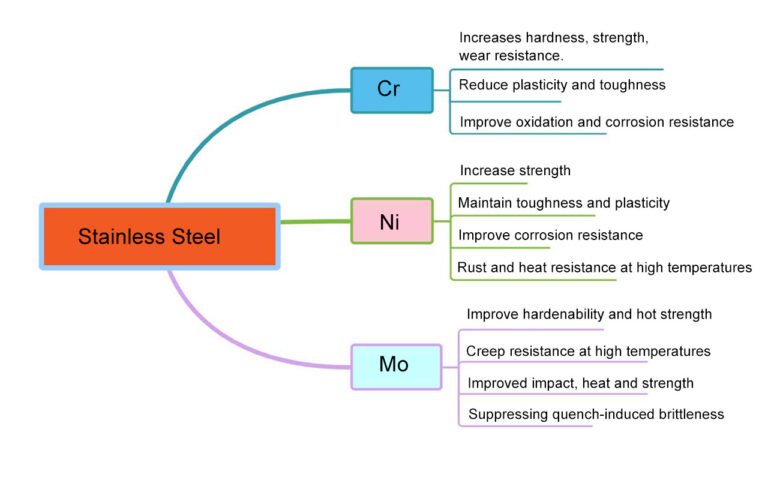
Alloy steels are a type of steel to which other elements such as chromium, molybdenum and nickel have been added. They have higher strength and corrosion resistance and are often used to make larger gauge fasteners that need to withstand higher loads.
4. Aluminum
Aluminum alloys are a lightweight, high-strength metal material. They are commonly used in the manufacture of large format fasteners, especially where there is a need to reduce the weight of the system.
5. Titanium
Titanium alloys are lightweight, high-strength metals with excellent corrosion resistance. They are commonly used in the manufacture of large format fasteners that need to withstand very high loads and operate in extreme environments.
What Is the Load-Bearing Capacity of an M48 Bolt?
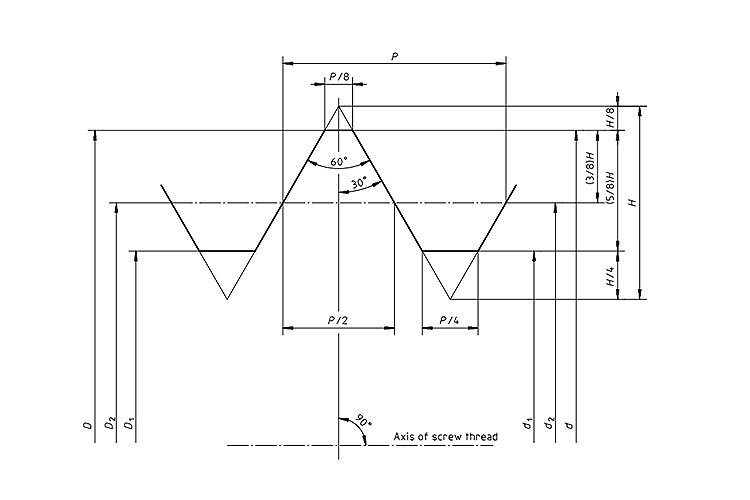
Common engineering formula for tensile cross-sectional area: As = π/4 × (d – 0.9382p)².
Taking M48 × 6mm as an example, the cross-sectional area is approximately 1410 mm².
| Strength | tensile strength | Bearing capacity |
| 8.8 | 800 MPa | ≈ 115 ton |
| 10.9 | 1040 MPa | ≈ 150 ton |
| 12.9 | 1220 MPa | ≈ 175 ton |
How to Manufacture Large-Size Fasteners?
Heat treatment
Heat treatment is a process of heating metal parts to a specific temperature and then cooling them. This treatment method can improve the mechanical properties of materials, such as strength, hardness, and toughness. For large-sized fasteners, quenching, normalizing, and tempering are commonly used treatment methods.
Surface treatment
Surface treatment is a process of coating or plating a metal surface. This treatment method can improve the corrosion resistance and wear resistance of the material. For large fasteners, zinc plating, nickel plating, and coating are commonly used.
Machining
Machining is a process of cutting, drilling and polishing metal parts by means of mechanical equipment. This type of processing improves the surface finish and dimensional accuracy of the material. For large size fasteners, machining is usually done by turning, milling and drilling.
Reference Standards
Choosing appropriate product and technical standards ensures that large-size fasteners comply with international and industry standards and achieve the expected performance requirements. Here are some common standards:
Product Standards
- ISO 4014: Hexagon head bolts with full thread
- ISO 4032: Hexagonal thin nuts
- DIN 6914: High strength large hexagon head bolts
- ASTM A325: Structural large hexagon head bolts
Technical Standards
- ISO 898-1: Mechanical properties of steel fasteners
- ASTM F2329: Fasteners with zinc-aluminum alloy hot-dip galvanized coating
- ASTM B117: Corrosion resistance in salt spray test
Material Standards
- ASTM A193: Standard Specification for Bolts and Nuts for High-Temperature Alloys and Stainless Steels
- ASTM A354: Standard Specification for Heavy-Duty Head Bolts for Alloy Steels
- ASTM B348: Standard Specification for Titanium and Titanium-Alloy Bars, Forgings, and Forged Wheels for Industrial Use
High-strength large bolts above M48 are the products that are more difficult to meet the technical requirements in large-size fasteners. To achieve the various technical performance indicators, in line with the requirements of the production crystal, there is considerable difficulty. Among them, the key to large-size fasteners is the choice of materials, which must contain a variety of high alloying elements, and the content of the elements must meet the product performance requirements.
If the element content does not meet the requirements, the comprehensive performance may not be achieved, especially low-temperature impact and section shrinkage of these difficult to achieve the target.
Secondly, heat treatment is also a key factor. If the heat treatment does not allow the core of the material to be fully heated through, the quality of the heat treatment will not be able to meet the technical and performance requirements. Therefore, a suitable heating furnace must be selected for adequate heating.
Finally, the installation torque is also one of the keys. Certain technical specifications must be followed for installation in order to ensure the safe use of large-size fasteners and meet the performance requirements.
In actual production, the selection of large-size high-strength fasteners, heat treatment and installation technology need to be based on the installed capacity of the wind turbine, the use of parts and the special requirements of the enterprise and other factors for comprehensive consideration.
Inspection Program: What Tests Must Be Done on Large Format Fasteners?
- Material Composition: Ensure that the steel complies with the grade.
- Mechanical property test: yield, tensile, elongation, hardness, impact (mandatory for bridges, low temperature, offshore)
- Metallographic test: check martensite distribution, grain size and impurity inclusions.
- Ultrasonic testing (UT): to detect the presence of internal cracks or shrinkage holes.
- Thread Gauge Inspection: Ensure that 6H / 6g accuracy is still met after plating.
Installation: Why Can’t an M48 Be Installed with a Wrench?
For bolts M48-M100, if a conventional torque wrench is used, it will appear:
- Errors in the coefficient of friction lead to deviations in preload of 30-50%.
- Twisting, jamming, off-loading.
- Repeatability cannot be guaranteed with a large number of manual operations.
Therefore, large-size bolts are recommended:
● Hydraulic Bolt Tensioning
- Preload deviation < 10%
- Multiple bolts can be tensioned at the same time
- Standard for wind power and petrochemical flanges
● Turn-of-Nut
Suitable for EN 14399 structural bolting systems.
● DTI Compression Gasket
Used for pre-tensioning indications for bridge steel structures.
Typical Application Scenarios
- Wind power (tower flange, nacelle bolts)
M48–M72
- Bridge Steel Structure
EN 14399 HV Bushing, friction type connection.
- Petrochemicals / Pressure Vessels
Large flanges are commonly used with M56-M100 studs.
- Offshore / Marine / Port Machinery
High corrosion + extra high loads.
- Heavy Machinery / Mining Equipment
Dynamic load impacts require high toughness materials.
Summarize
Large size fasteners are not simply “sized up” for use. They are responsible for critical structural safety, and every step of the way – from steel selection, forging, heat treating, threading, and preloading for installation – determines ultimate reliability.