
Ductility Testing
To check whether the product is at risk of head fracture during assembly when being rotated, tightened, or subjected to impact during these processes.
Test Tools: Small hammer, ductility test fixture.
Minimum test quantity is 8 per lot.
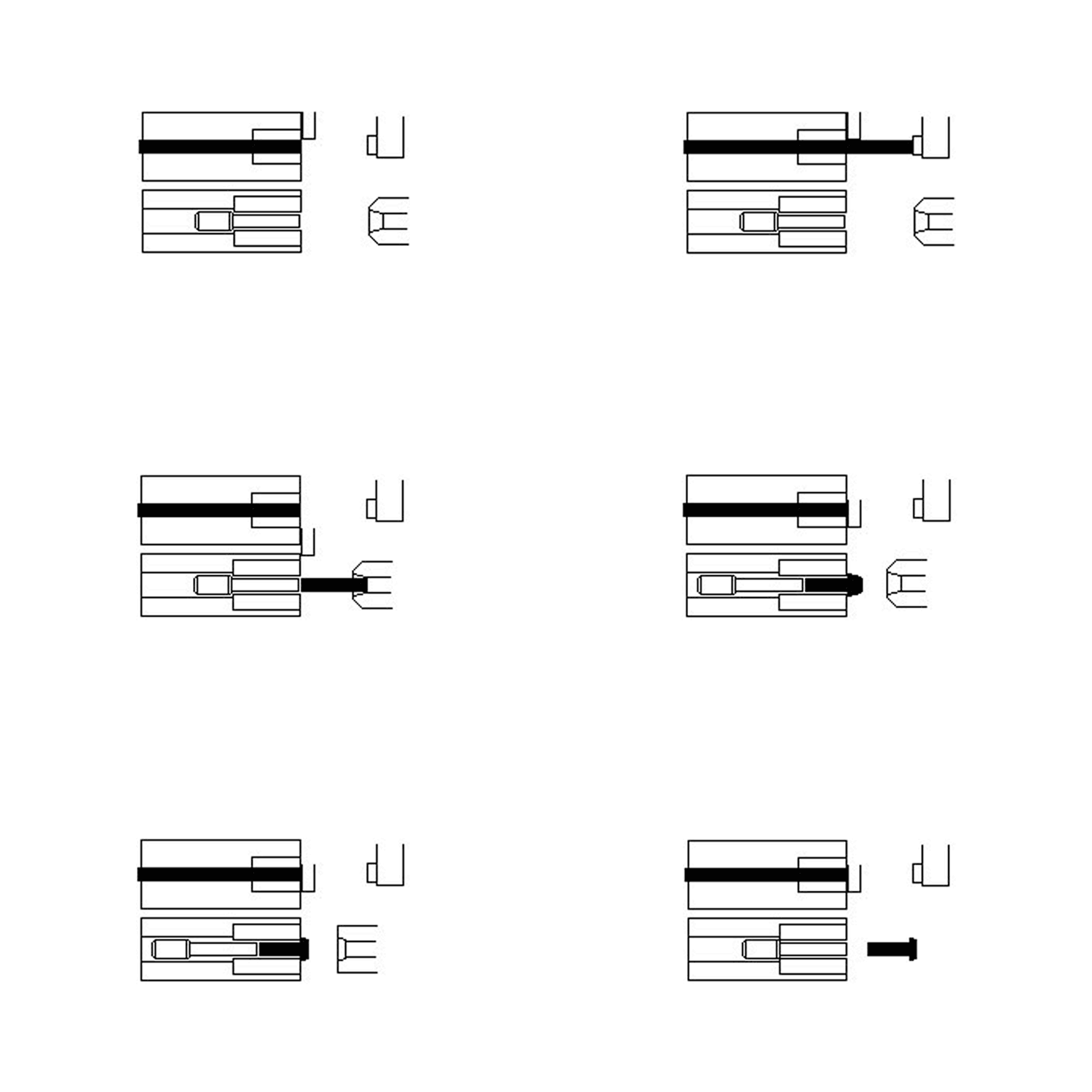
Test procedure: Place the screw into an appropriate hole of the test fixture. Strike the top of the screw head with a hammer so that the bearing surface of the test specimen fully contacts the test fixture.
If the head is completely separated from the screw shank it is a bad test.
Product defective factors: core hardness is too high, carburizing layer is too deep, punching hole is too deep, inner diameter under the head is too small.
Torque Testing

Check for product breakage due to insufficient torque in assembly rotation or screwing.
Testing device: Screw fixture, fixture holder, screw measurement holder, torque wrench with accuracy within ±2%.
Recommended minimum test quantity is 4 per lot.
Test procedure: Place the screw into the test fixture and then place the fixture into the fixture support. The screw should have at least two threads inside the fixture and two threads outside the fixture. Fix the support to the measuring fixture. Twist the wrench until the screw breaks and record the destructive value.
Defective product: The screw breakage value is less than the specified value.
Product defects: Core hardness is too low, surface hardness is too low, effective carburized layer is insufficient, minimum diameter (tooth root diameter) is too small.
Driving Test

Check whether the product will fail to assemble due to thread breakage during assembly. Applicable to all types of self-tapping screws except Type 25.
Testing equipment: test steel plate, torsion tool (power tool can be used, but not exceeding 500 rpm).
It is recommended to test at least 4 units per batch.
Test procedure: Screws are driven into the test steel plate until the first complete thread passes through the steel plate, and the thread is checked for breakage.
Note: This test can be performed in conjunction with the screw-in torque test and the hydrogen embrittlement test.
Product defects: Insufficient effective carburized layer, carburized hardness too low, test steel plate too hard, test hole too small.
Screw Driving Torque Test

Check if the product is difficult to assemble due to excessive screwing torque during assembly. This applies to self-tapping screws with rolled (triangular) threads.
Testing equipment: a torque wrench with an accuracy within ±2% for testing steel plates.
Recommended minimum test quantity: 4 units per batch.
Test procedure: Screw the screw into the test steel plate with a torque wrench until the first complete thread passes through the steel plate. For plain screws, apply a small amount of oil and record the highest torque value.
Note: This test can be performed in conjunction with the spin-in test and the hydrogen embrittlement test.
NG: The maximum torque required to screw in the screw exceeds the specified value.
NG factors: improper forming during thread rolling, insufficient carburizing hardness, insufficient carburizing depth, test steel plate is too hard, test hole is too small, and the product needs to be oiled or waxed.
Hydrogen Embrittlement Testing

Early detection can prevent electroplated self-tapping screws from breaking down within 24 hours of tightening due to hydrogen embrittlement. This method is applicable to all electroplated self-tapping screws.
Test device: Test steel plate, torque wrench with accuracy within ±2%, flat washer.
Recommended Minimum Test Quantity: 8 units per batch, not to exceed 250M PCS per batch.
Test Procedure: Take the average of torque strength as the benchmark, multiply it by 80% for locking torque. Put the flat washer into the screw and then screw the screw into the test steel plate, tighten it to the locking torque and leave it for 24 hours. Loosen the screws and tighten them to the locking torque.
NG: From the beginning to the end of the test, there must not be any broken screws.
NG factors: plating is not dried, screws are locked with too high a locking torque, not set into the washer resulting in too high a clamping torque, hole depth is too deep.
Tapping Speed Test

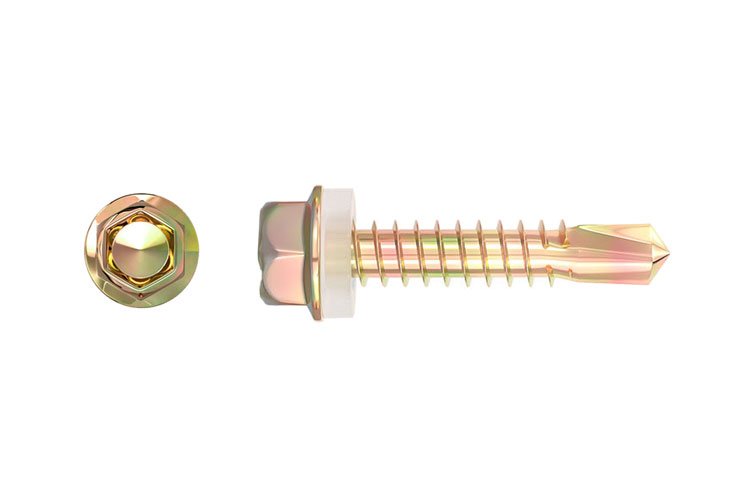
Self-drilling screw tapping speed is too slow or production problems caused by tapping problems, applicable to self-drilling screws.
Testing device: Tapping tester, testing steel plate, thickness 0.060 to 0.064, hardness HRB 60 to 85.
Suggested minimum number of test pieces: 6 pieces for up to 5000 pieces, 12 pieces between 5001 and 15000 pieces, 18 pieces between 15001 and 50000 pieces, and 25 pieces between 50001 and 250,000 pieces.
Note: Lot sizes not to exceed 250,000 units per batch.
If one unit exceeds the minimum drive speed requirement according to the above sampling test, the following sampling plan can be implemented to double the test.
| Sample Size | Slow Driving Speed | Excessively Slow Driving Speed |
| 12 | 1 | 0 |
| 24 | 1 | 0 |
| 36 | 2 | 1 |
| 50 | 3 | 1 |
Note:
- “Slow Driving Speed” refers to samples exceeding the maximum insertion time but not more than twice the maximum.
- “Excessively Slow Driving Speed” refers to samples exceeding twice the maximum insertion time.
Test Procedure: Load the test screws onto the tester, then adjust the tester so that when the self-drilling screws are tapped through the steel plate and more than one full tooth, the tester can stop and record the time of penetration and record the test time.
The test time exceeded the specified value when tested according to the above sampling table.
Failure Analysis:
- Sample drill end burrs
- Carburizing hardness too low
- Carburizing depth insufficient
- Test plate too hard, too thick
- Axial load too tight
- Tapping speed too slow
- Coating Too Thick
Self-Tapping Screw Test Plate Selection Table
Type A
| Size | Ductility Test Minimum Angle | Minimum Torque Strength (lb-in.) | Test Steel Plate (HRB 70–85) Thickness ±0.002 mm | Hole Diameter Tolerance: ±0.001 mm |
|---|---|---|---|---|
| 2-32 | 10 | 4 | 0.048 | 0.076 |
| 3-28 | 10 | 9 | 0.048 | 0.081 |
| 4-24 | 10 | 12 | 0.048 | 0.086 |
| 5-20 | 10 | 18 | 0.048 | 0.1065 |
| 6-18 | 10 | 24 | 0.075 | 0.116 |
| 7-16 | 10 | 30 | 0.075 | 0.1285 |
| 8-15 | 10 | 39 | 0.075 | 0.136 |
| 9-14 | 10 | 43 | 0.075 | 0.149 |
| 10-12 | 10 | 48 | 0.125 | 0.159 |
| 12-11 | 10 | 83 | 0.125 | 0.1875 |
| 14-10 | 10 | 125 | 0.125 | 0.2165 |
| 16-10 | 10 | 152 | 0.1875 | 0.238 |
| 18-9 | 10 | 196 | 0.1875 | 0.261 |
| 20-9 | 10 | 250 | 0.1875 | 0.290 |
| 24-9 | 10 | 492 | 0.1875 | 0.3438 |
| Minimum Sample Size | 8 | 4 |
Type AB, B, BT
| Inch | Metric | Ductility Test Minimum Angle | Minimum Torque Strength (lb-in.) | Test Steel Plate Thickness ±0.002 mm | Hole Diameter Tolerance: ±0.001 mm |
|---|---|---|---|---|---|
| 2-32 | M2.2×0.79 | 10 | 4 | 0.048 | 0.076 |
| 3-28 | — | 10 | 9 | 0.048 | 0.081 |
| 4-24 | M2.9×1.06 | 10 | 13 | 0.048 | 0.086 |
| 5-20 | — | 10 | 18 | 0.048 | 0.1065 |
| 6-20 | M3.5×1.27 | 10 | 24 | 0.075 | 0.116 |
| 7-19 | — | 10 | 30 | 0.075 | 0.1285 |
| 8-18 | M4.2×1.41 | 10 | 39 | 0.075 | 0.136 |
| 10-16 | M4.8×1.59 | 10 | 56 | 0.125 | 0.159 |
| 12-14 | M5.5×1.81 | 10 | 88 | 0.125 | 0.1875 |
| 1/4-14 | M6.3×1.81 | 10 | 142 | 0.1875 | 0.2165 |
| 5/16-12 | M8×2.12 | 10 | 290 | 0.1875 | 0.272 |
| 3/8-12 | M9.5×2.12 | 10 | 590 | 0.1875 | 0.3281 |
| Minimum Sample Size | — | 8 | 4 |
Type F,T23,Inch
| Size | Ductility Test Minimum Angle | Minimum Torque Strength (lb-in.) | Test Steel Plate Thickness ±0.002 mm | Hole Diameter Tolerance: ±0.001 mm |
|---|---|---|---|---|
| 2-56 | 10 | 5 | 0.078 | 0.073 |
| 3-48 | 10 | 9 | 0.094 | 0.081 |
| 4-40 | 10 | 13 | 0.109 | 0.096 |
| 5-40 | 10 | 18 | 0.109 | 0.101 |
| 6-32 | 10 | 23 | 0.140 | 0.120 |
| 8-32 | 10 | 42 | 0.140 | 0.147 |
| 10-24 | 10 | 56 | 0.1875 | 0.173 |
| 10-32 | 10 | 74 | 0.1875 | 0.177 |
| 12-24 | 10 | 93 | 0.1875 | 0.199 |
| 1/4-20 | 10 | 140 | 0.250 | 0.228 |
| 1/4-28 | 10 | 179 | 0.250 | 0.234 |
| 5/16-18 | 10 | 306 | 0.3125 | 0.290 |
| 5/16-24 | 10 | 370 | 0.3125 | 0.295 |
| Minimum Sample Size | 8 | 4 |
Type F, T23, Metric
| Size | Ductility Test Minimum Angle | Minimum Torque Strength (lb-in.) | Test Steel Plate Thickness ±0.002 mm | Hole Diameter Tolerance: ±0.001 mm |
|---|---|---|---|---|
| M2x0.4 | 10 | 4 | 0.078 | 0.067 |
| M2.5×0.45 | 10 | 10 | 0.094 | 0.083 |
| M3x0.5 | 10 | 18 | 0.109 | 0.102 |
| M3.5×0.6 | 10 | 27 | 0.140 | 0.122 |
| M4x0.7 | 10 | 41 | 0.140 | 0.138 |
| M5x0.8 | 10 | 83 | 0.1875 | 0.177 |
| M6x1.0 | 10 | 142 | 0.250 | 0.213 |
| M8x1.25 | 10 | 354 | 0.312 | 0.291 |
| Minimum Sample Size | 8 | 4 |
Thread-Rolled (Triangular Thread) – Imperial
| Size | Ductility Test Minimum Angle | Minimum Torque Strength (lb-in.) | Test Steel Plate Thickness ±0.002 mm | Hole Diameter Tolerance: ±0.001 mm | Driving Torque Phosphate and Oiled Cadmium Coating lb-in | Driving Torque – Zinc Plating (lb-in.) |
|---|---|---|---|---|---|---|
| 2-56 | 10 | 6 | 0.125 | 0.075 | 4.5 | 6 |
| 3-48 | 10 | 10 | 0.125 | 0.087 | 7.5 | 9.5 |
| 4-40 | 10 | 14 | 0.125 | 0.098 | 9 | 13 |
| 5-40 | 10 | 22 | 0.125 | 0.110 | 12 | 16 |
| 6-32 | 10 | 24 | 0.125 | 0.120 | 14 | 20 |
| 8-32 | 10 | 48 | 0.1875 | 0.147 | 25 | 32 |
| 10-24 | 10 | 65 | 0.1875 | 0.166 | 35 | 52 |
| 10-32 | 10 | 74 | 0.1875 | 0.172 | 35 | 52 |
| 1/4-20 | 10 | 156 | 0.250 | 0.219 | 90 | 120 |
| 5/16-18 | 10 | 330 | 0.312 | 0.277 | 180 | 240 |
| 3/18-16 | 10 | 600 | 0.375 | 0.339 | 240 | 300 |
| Minimum Sample Size | 8 | 4 | 4 | 4 |
Thread-Rolled (Triangular Thread) – Metric
| Size | Ductility Test Minimum Angle | Minimum Torque Strength (lb-in.) | Test Steel Plate Thickness ±0.002 mm | Hole Diameter Tolerance: ±0.001 mm | Driving Torque Phosphate and Oiled Cadmium Coating lb-in | Driving Torque – Zinc Plating (lb-in.) |
|---|---|---|---|---|---|---|
| M2x0.4 | 10 | 6 | 0.125 | 0.070 | 4 | 5 |
| M2.5×0.45 | 10 | 11 | 0.125 | 0.088 | 7 | 9. |
| M3x0.5 | 10 | 19 | 0.125 | 0.106 | 11 | 15 |
| M3.5×0.6 | 10 | 31 | 0.125 | 0.124 | 17 | 21 |
| M4x0.7 | 10 | 46 | 0.207 | 0.142 | 22 | 30 |
| M5x0.8 | 10 | 93 | 0.207 | 0.179 | 42 | 53 |
| M6x1.0 | 10 | 153 | 0.250 | 0.2125 | 66 | 81 |
| M8x1.25 | 10 | 380 | 0.315 | 0.2875 | 142 | 177 |
| M10x1.5 | 10 | 770 | 0.394 | 0.362 | 248 | 310 |
| Minimum Sample Size | 8 | 4 | 4 | 4 |
Self-Drilling Screw
| Size | Ductility Test Minimum Angle | Minimum Torque Strength (lb-in.) | Hydrogen Embrittlement Test Steel Plate (RB 60–85) ±0.002 mm | Driving Speed Test Steel Plate (RB 60–85) ±0.002 mm | Driving Speed (rpm) | Axial Load – Surface Treatment (Note 1) | Maximum Penetration Time, sec | ||||
| Inch | Metric | Style 2 | Style 3 | A | B | C | |||||
| 4-20 | M2.9×1.06 | 5 | 14 | 0.079 | — | 0.062 | 2500 | 25 | 30 | 45 | 2.0 |
| 6-20 | M3.5×1.27 | 5 | 24 | 0.090 | 0.110 | 0.062 | 2500 | 30 | 35 | 45 | 2.5 |
| 8-18 | M4.2×1.41 | 5 | 42 | 0.098 | 0.142 | 0.062 | 2500 | 30 | 35 | 45 | 3.0 |
| 10-16 | M4.8×1.59 | 5 | 61 | 0.110 | 0.173 | 0.062 | 2500 | 35 | 40 | 50 | 3.5 |
| 12-14 | M5.5×1.81 | 5 | 92 | 0.142 | 0.209 | 0.062 | 1800 | 45 | 50 | 60 | 4.0 |
| 1/4-14 | M6.3×2.12 | 5 | 150 | 0.173 | 0.209 | 0.062 | 1800 | 45 | 50 | 60 | 5.0 |
| Minimum Sample Size | 8 | 4 | Note 2 | Note 3 | |||||||
Note 1: Surface Treatment Classification:
- A: Surface coating thickness does not exceed 0.0003” (inclusive).
- B: Surface coating thickness exceeds 0.0003”.
- C: Chrome-plated samples.
Note 2: For nominal screw sizes #4–#10, use 2500 rpm. For #12 and 1/4”, 1800 rpm is recommended; 2500 rpm may also be used, but care must be taken to avoid excessive heat generated by high surface speed, which may affect test results.