Hex bolts and screws are commonly used due to their ease of operation. However, while both feature a hexagonal shape, what distinguishes external hex bolts from internal hex bolts? Here, we will delve into their differences in terms of appearance, fastening tools, cost, advantages and disadvantages, and suitable applications.

Appearance
Hex head bolts/screws are likely familiar to most people—they feature a hexagonal head without a recess. To increase the head’s bearing surface area, they can also be manufactured as hex flange bolts, a variant that sees widespread application.

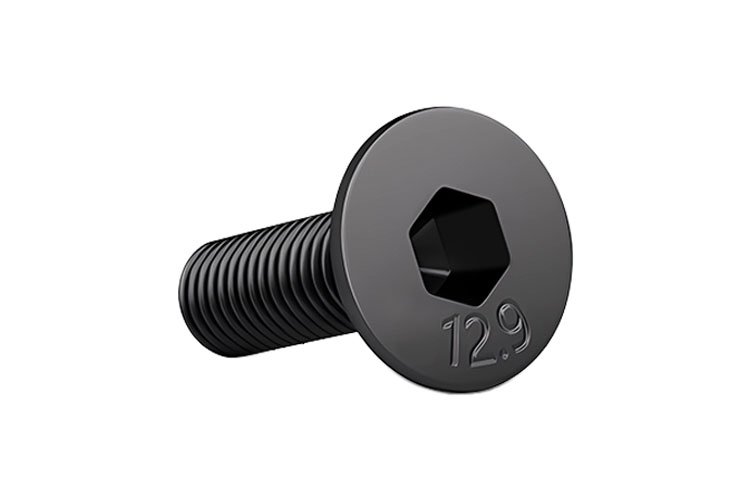
The head of a hex socket head cap screw is rounded on the outside and concave hexagonal in the middle. The most common type is the cylindrical head hex socket head cap screw, but there are also pan head hex socket head cap screws, semi-circular head hex socket head cap screws, countersunk head hex socket head cap screws, flat head hex socket head cap screws, and headless screws, such as headless screws, set screws, and nut screws. Of course, hex socket head cap screws can also be made into flange screws to increase the head contact area.
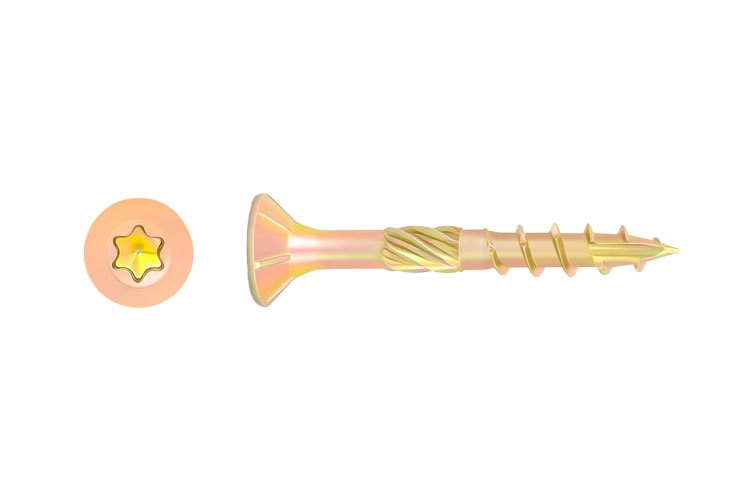
There are also some Torx socket head cap screws, which are relatively rare on the market and have a limited range of applications. In addition to standard parts, hex socket screws can also be customized to meet the needs of different users with special specifications and sizes.In addition to standard parts, hex socket screws can also be customized to meet the needs of different users with special specifications and sizes.

To control the friction coefficient of the bolt head or improve its anti-loosening performance, it can also be made into an external hexagonal combination bolt and an internal hexagonal combination bolt, as shown in the figure below.

Hex Bolts with Washers

Hex Socket Head Cap Screw with Washer
Fastening tools
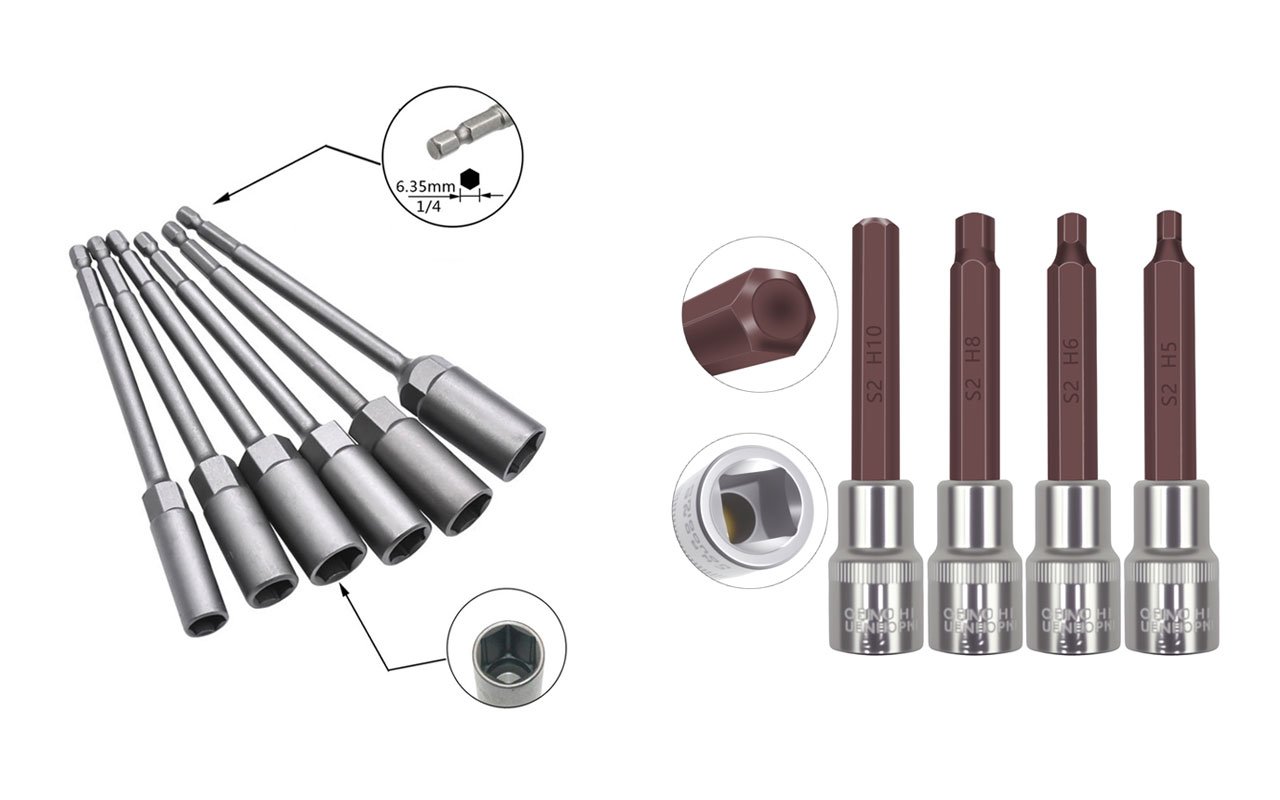
Common fastening tools for hexagon bolts/screws are wrenches with heads shaped as equilateral hexagons, such as adjustable wrenches, box-end wrenches, open-end wrenches, and torque wrenches.
Wrenches for hexagon socket bolts/screws are L-shaped, with one side longer than the other. The shorter side is used to turn the screw, while gripping the longer side allows for more efficient and secure tightening.

During assembly in production, to ensure fastening quality and meet automation requirements, assembly is performed using preset torque wrenches and high-precision fastening guns. As shown in the figure below, both tools are equipped with a series of sockets sized to match the bolt head dimensions.
Costs
The threads on hex socket screws and hex bolts are typically formed by rolling, using essentially identical thread rolling plates, with no significant cost difference.
The key difference lies in the head manufacturing process. Since the head structures are entirely different, distinct molds and techniques are required. The production cost for hex socket head cap screws is higher than that for hex head cap screws. The cost of hex head cap screws is only half that of hex socket head cap screws/screws.
Advantages
| Hex Head Bolts/Screws | Hex Socket Bolts/Screws |
|---|---|
| Large preload contact area and high preload force; It can have a reamed hole to fix the position of the part and withstand the shearing caused by lateral force; Full thread length offers a broader range; The head is thinner than an Socket Head Cap Screw, and in some applications, Socket Head Cap Screws cannot be substituted. | Easy to fasten; not easy to disassemble; not easy to slip; small space occupied; large load-bearing capacity; can be buried in the workpiece, making it more delicate and beautiful, and will not interfere with other parts. |


Fastener Defects
Hex socket bolts/screws:
- It occupies a relatively large space and is not suitable for more delicate applications;
- It cannot be used for countersinking.
Hex socket bolts/screws:
- Small contact area, low preload;
- No full thread beyond a certain length;
- Difficult to find compatible fastening tools, prone to stripping when tightening, inconvenient to replace;
- Requires specialized wrenches for disassembly, difficult to remove under normal circumstances.
Application Scenarios
Having understood the advantages and disadvantages of hex bolts and hex socket screws, how should one choose between them for specific applications?
If the required axial force for tightening is large—that is, the tightening torque is high—and sufficient external tightening space is available, use hex head bolts for tightening。If space constraints exist at the tightening location, or if a countersunk head is required for aesthetic purposes, and the tightening point requires minimal axial force—meaning the tightening torque is low—then hex socket screws may be used.
Taking automobiles as an example, at the connection points between the subframe and the body, several bolts pass through the bottom of the subframe and are tightened into the body. Since the underside is an invisible area with no aesthetic requirements, tightening poses no interference issues. Moreover, the required axial force and torque for tightening are substantial (over-yield tightening of bolts). For such connection points, hex bolts are suitable for tightening.
The connection of interior trim components is visible to customers and typically requires aesthetic appeal. This necessitates countersunk structures where the bolt head’s top surface aligns flush with the connected component’s surface, or where an additional cover plate is required. Tightening forces and torque requirements at these locations are also relatively low. Therefore, hex socket bolts or screws are highly suitable for tightening applications.
Hex bolts/screws are used for:
- Connecting large equipment;
- Thin-walled parts or those subjected to impact, vibration, or alternating loads;
- Situations requiring longer thread lengths;
- Mechanical connections that are low in cost, low in power intensity, and low in precision requirements;
- In situations where space is not a consideration.
Hex socket head cap screws/bolts are used for:
- Connecting small equipment;
- Mechanical connections requiring high aesthetics and precision;
- Applications requiring countersunk heads;
- Confined assembly spaces.
Summary
Despite the numerous differences outlined above between hex head bolts/screws and socket head cap screws, we do not rely solely on one type to meet diverse application needs. Instead, multiple fasteners must be used in combination. In practice, choose hex socket head bolts/screws when the connection requires precision, aesthetics, or limited assembly space. For applications without these constraints, opt for hex head bolts/screws.