Color Zinc Plated

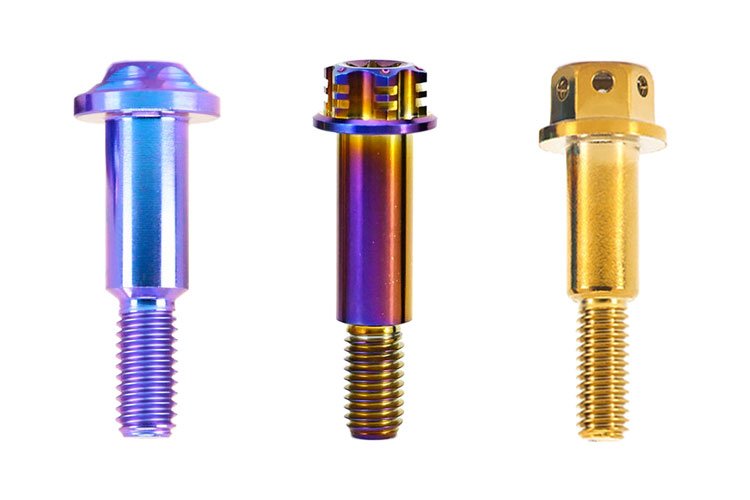
The surface has a rainbow-colored sheen; when rotated, it displays a gradient of colors, including yellow, purple, and green. It has a high gloss and a distinct metallic finish.
- Pros: Excellent corrosion resistance (salt spray test >48 hours),, vibrant appearance, and moderate cost.
- Cons: Hexavalent chromium is toxic and environmentally unfriendly, and may cause hydrogen embrittlement, which affects compatibility.
- Applications: Commonly used in fasteners for automotive and home appliance applications that require both decorative and corrosion-resistant properties.
| Pollution | ★★★★☆☆ |
| Corrosion Resistance | ★★★★☆☆ |
| Wear Resistance | ★★☆☆☆☆ |
| Cost | ★★☆☆☆☆ |
Dacromet

The surface has a uniform matte silver-gray finish with no noticeable metallic sheen; the coating is smooth and free of iridescence.
- Pros: Excellent corrosion resistance (salt spray test >100 hours), no hydrogen embrittlement, high-temperature resistance.
- Cons: Poor electrical conductivity; low wear resistance; high curing temperature.
- Applications: Automotive chassis, high-strength fasteners, high-temperature components.
| Pollution | ★☆☆☆☆☆ |
| Corrosion Resistance | ★★★★★☆ |
| Wear Resistance | ★★★☆☆☆ |
| Cost | ★★★★☆☆ |
Passivation
Typically silver-white or light gray, with no distinct hue, this is the standard appearance following the passivation process after galvanizing.
- Pros: Improved corrosion resistance, low cost, and no impact on dimensions.
- Cons: Thin coating, poor wear resistance, poor resistance to strong acids, and prone to contamination.
- Applications: Stainless steel fasteners, food processing equipment, and medical devices.
| Pollution | ★★★☆☆☆ |
| Corrosion Resistance | ★★★☆☆☆ |
| Wear Resistance | ★★☆☆☆☆ |
| Cost | ★★☆☆☆☆ |
Mechanical Galvanizing
Dark gray or charcoal gray surface with a slightly granular, snowflake-like texture, and no obvious gloss.
- Pros: Excellent corrosion resistance, no hydrogen embrittlement, and reasonable cost.
- Cons: Rough surface finish, dimensional limitations, and lack of suitability for thin-walled parts.
- Applications: Commonly used in power fittings, highway guardrails, marine applications, and high-strength fasteners.
| Pollution | ★★☆☆☆☆ |
| Corrosion Resistance | ★★★★★☆ |
| Wear Resistance | ★★★★★☆ |
| Cost | ★★★☆☆☆ |
Nickel Plating
Glossy, silvery-white appearance with a fine coating.
- Pros: Moderate corrosion resistance (salt spray 6–12 hours) and good electrical conductivity.
- Cons: Higher cost than standard zinc plating, risk of hydrogen embrittlement, and wastewater treatment required.
- Applications: Electronic connectors, chemical equipment, exterior components.
| Pollution | ★★★★★☆ |
| Corrosion Resistance | ★★★★☆☆ |
| Wear Resistance | ★★★★★☆ |
| Cost | ★★★☆☆☆ |
Black Ruspert Coating
Deep black color with a slightly oily/slick feel, a uniform coating, and no noticeable particles.
- Pros: Excellent corrosion resistance, adjustable appearance, and no hydrogen embrittlement.
- Cons: Higher cost, thicker coating, and limited color options (mainly black/silver).
- Applications: Commonly used in building roofs, automotive chassis, wind power, and marine engineering in highly corrosive environments.
| Pollution | ★★☆☆☆☆ |
| Corrosion Resistance | ★★★★★☆ |
| Wear Resistance | ★★★★★☆ |
| Cost | ★★★★☆☆ |
Black Zinc Plating
Uniform deep black finish with a noticeable metallic luster, achieved through black passivation after zinc electroplating.
- Pros: Moderate corrosion resistance (better than yellow zinc plating), salt spray resistance of 20–40 hours, good appearance, and relatively high hardness.
- Cons: Limited corrosion durability compared to advanced coatings, not environmentally friendly, and poor wear resistance.
- Applications: Commonly used in automotive components, high-end machinery, electrical and electronic products, and furniture hardware.
| Pollution | ★★★☆☆☆ |
| Corrosion Resistance | ★★★☆☆☆ |
| Wear Resistance | ★★☆☆☆☆ |
| Cost | ★★☆☆☆☆ |
Geomet Coating
Matte silver-gray, with a sheen that is darker than Dacromet; the coating is uniform and shows no noticeable metallic glare.
- Pros: Superior corrosion resistance, chrome-free and eco-friendly, no hydrogen embrittlement, high-temperature resistance.
- Cons: Higher cost, thin coating (5–8 μm).
- Applications: Automotive chassis/engines, high-strength fasteners, marine engineering.
| Pollution | ★☆☆☆☆☆ |
| Corrosion Resistance | ★★★★★★ |
| Wear Resistance | ★★★☆☆☆ |
| Cost | ★★★★★☆ |
Paint Coating
Available in various colors, with a smooth surface and coated texture, and no metallic luster.
- Pros: Wide color options, thick coating, excellent corrosion resistance, and cost-effective.
- Cons: Poor wear resistance, susceptibility to scratching, high energy consumption during curing, and uneven film thickness.
- Applications: Outdoor railings, agricultural machinery, furniture hardware, and appliance casings.
| Pollution | ★★★☆☆☆ |
| Corrosion Resistance | ★★★★☆☆ |
| Wear Resistance | ★★★☆☆☆ |
| Cost | ★★★☆☆☆ |
Blue-White Zinc Plating
Light blue matte finish with a uniform tone, no iridescence, even reflectivity, and resistant to fingerprints.
- Pros: Moderate corrosion resistance (salt spray 6–12 hours), good decorative appearance, and low cost.
- Cons: Lower corrosion resistance than yellow zinc and black zinc, thin coating, and prone to discoloration.
- Applications: Commonly used in electronics and home appliances, indoor furniture, and general industrial fasteners.
| Pollution | ★★★★☆☆ |
| Corrosion Resistance | ★★★☆☆☆ |
| Wear Resistance | ★★☆☆☆☆ |
| Cost | ★★☆☆☆☆ |
Glossy Black Finish
High-gloss black surface with a mirror-like smoothness and strong reflectivity.
- Pros: Bright black appearance with excellent decorative appeal and relatively good corrosion resistance.
- Cons: Traditional black zinc plating is not environmentally friendly; electrophoretic black coating has a higher cost.
- Applications: Commonly used in high-end home appliances, automotive interior and exterior parts, electronic products, and furniture hardware.
| Pollution | ★☆☆☆☆☆ |
| Corrosion Resistance | ★☆☆☆☆☆ |
| Wear Resistance | ★★☆☆☆☆ |
| Cost | ★☆☆☆☆☆ |
Hot-Dip Galvanizing (HDG)
Dark gray or silver-gray surface with zinc spangle patterns, a rough finish, possible zinc nodules, and zinc buildup on threads.
- Pros: Thick coating (15–100 μm), excellent corrosion resistance (96+ hours salt spray), strong adhesion, and relatively low cost.
- Cons: High-temperature processing may affect the mechanical properties of high-strength fasteners; rough surface finish; thread clearance must be reserved; not suitable for fasteners above property class 10.9.
- Applications: Power fittings, highway guardrails, outdoor steel structures, underground engineering.
| Pollution | ★★★★☆☆ |
| Corrosion Resistance | ★★★★★☆ |
| Wear Resistance | ★★★☆☆☆ |
| Cost | ★★★☆☆☆ |
Trivalent Chromium Color Zinc
Light iridescent (rainbow-like) finish, softer than traditional yellow zinc, chromium-free and environmentally friendly, with better color stability.
- Pros: Eco-friendly and non-toxic, corrosion resistance 5–8 times higher than white zinc plating, up to 200 hours salt spray resistance, and bright appearance.
- Cons: Slightly lower corrosion resistance than hexavalent chromium color zinc, and higher cost.
- Applications: Electronics, automotive parts, and fasteners requiring export environmental standards.
| Pollution | ★★☆☆☆☆ |
| Corrosion Resistance | ★★★★☆☆ |
| Wear Resistance | ★★☆☆☆☆ |
| Cost | ★★☆☆☆☆ |
Thread Locking Patch (Pre-applied Adhesive)
A blue or colored adhesive layer is applied to the threads, providing uniform coverage for anti-loosening.
- Pros: Anti-loosening, vibration resistance, good sealing performance, wear resistance, and temperature resistance.
- Cons: Higher cost, requires curing time, and may fail under high temperatures.
- Application Scenarios: Automotive, electronic equipment, pneumatic components, and fasteners requiring anti-loosening and shock resistance.
| Pollution | ★★★☆☆☆ |
| Corrosion Resistance | ★★★★☆☆ |
| Wear Resistance | ★★☆☆☆☆ |
| Cost | ★★☆☆☆☆ |
Black Oxide (Matte Finish)
Matte black, non-reflective surface with a fine texture, formed by a chemical oxidation layer.
- Pros: Good rust resistance, consistent dimensional accuracy, moderate cost.
- Cons: Thin coating with poor wear resistance; lower corrosion protection than plated coatings (e.g., salt spray for 3–5 hours); requires regular oiling for maintenance.
- Applications: Optical equipment, precision instruments, military parts, industrial hardware.
| Pollution | ★☆☆☆☆☆ |
| Corrosion Resistance | ★☆☆☆☆☆ |
| Wear Resistance | ★★☆☆☆☆ |
| Cost | ★☆☆☆☆☆ |
Black Oxide
Blue-black or matte black finish with an extremely thin oxide layer, typically used with rust-preventive oil
- Pros: Low cost, no change in dimensional accuracy, and no hydrogen embrittlement.
- Cons: Poor corrosion resistance, very thin coating, low wear resistance, and not resistant to acids and alkalis.
- Application scenarios: Precision instruments, mechanical parts, hardware tools, optical equipment.
| Pollution | ★★☆☆☆☆ |
| Corrosion Resistance | ★☆☆☆☆☆ |
| Wear Resistance | ★★☆☆☆☆ |
| Cost | ★☆☆☆☆☆ |
Phosphating

Gray-black, dark gray, or black surface with a uniform crystalline structure. The coating has a certain thickness and good adhesion, and is often used as a pre-treatment layer before oiling or painting.
- Pros: Better corrosion resistance than black oxide, strong adhesion (ideal for coating or oiling), provides some wear resistance, and moderate cost.
- Cons: Less visually appealing than electroplating, limited corrosion protection when used alone (requires oiling or sealing), and highly dependent on the process for coating uniformity.
- Applications: Automotive fasteners, structural parts, mechanical components, industrial equipment, bolt-and-nut pretreatment, etc.
| Pollution | ★★★☆☆☆ |
| Corrosion Resistance | ★★☆☆☆☆ |
| Wear Resistance | ★★★☆☆☆ |
| Cost | ★★☆☆☆☆ |
White Zinc Plating
Silver-white or slightly bluish in color, with a bright, metallic finish. The coating is relatively thin, commonly electroplated zinc with a transparent passivation treatment.
- Attractive appearance, excellent rust resistance (superior to blackening), low cost, suitable for mass production, and highly versatile;
- Cons: Limited salt spray resistance (6–12 hours), not resistant to high temperatures, may fail in long-term outdoor exposure, and risk of hydrogen embrittlement (de-embrittlement required for high-strength parts).
- Applications: General fasteners, home appliance hardware, building accessories, electronic products, light industrial equipment, etc.
| Pollution | ★★★☆☆☆ |
| Corrosion Resistance | ★★★☆☆☆ |
| Wear Resistance | ★★☆☆☆☆ |
| Cost | ★☆☆☆☆☆ |