Black screws are very common in mechanical assembly. They have a unique black appearance and are often considered to have a certain rust-proof function. So what exactly is plated on the surface of black screws? What properties do different materials possess?
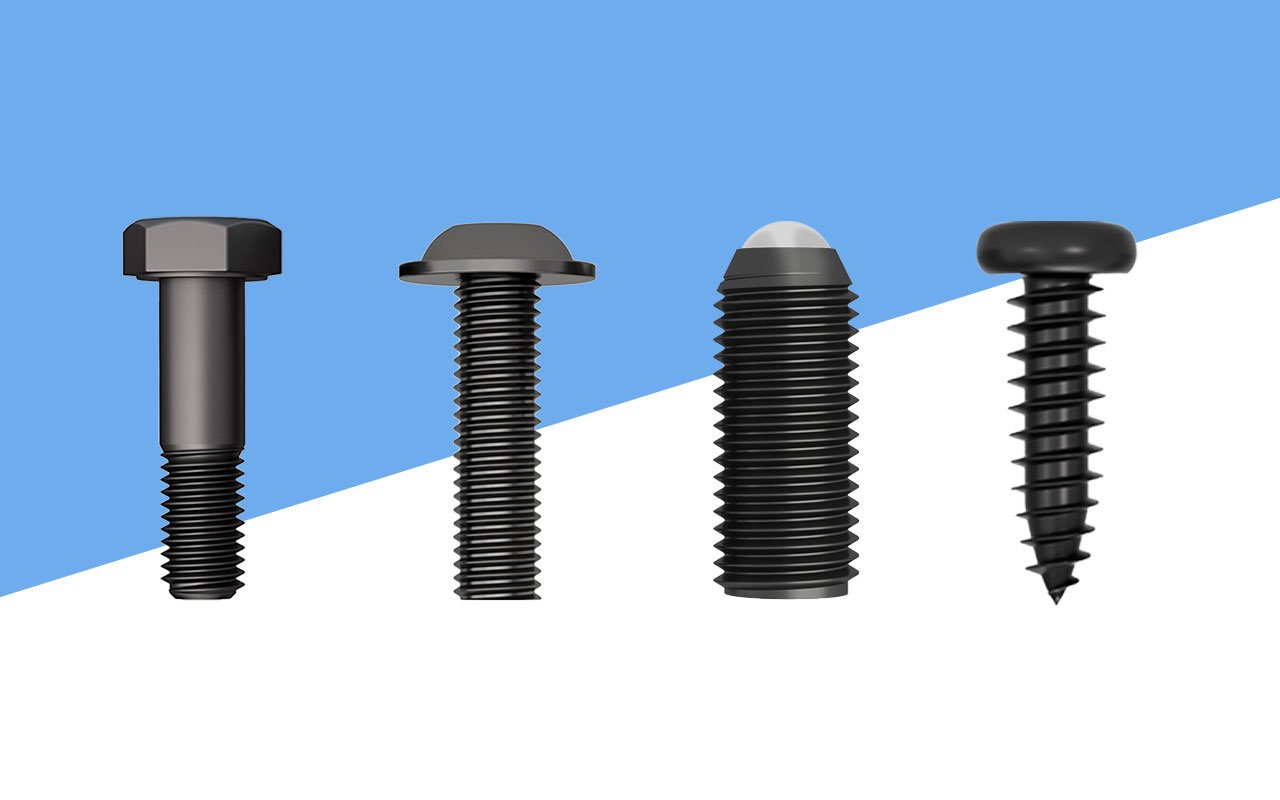
What Is Plated on the Surface of the Black Screw?
- Zinc Plated + Blackened
Galvanizing is a very common and effective method of rust prevention. During electroplating, the screw is placed as the cathode in an electrolyte containing zinc ions. When a direct current is applied, the zinc ions gain electrons at the cathode and are reduced to metallic zinc, which is then deposited on the screw surface, forming a uniform and dense zinc coating. Zinc is chemically relatively reactive; in the atmosphere, it reacts with oxygen to form a basic zinc carbonate film. This film prevents oxygen and moisture from further contacting the screw substrate (usually carbon steel), thus providing rust protection.
The blackening process after galvanizing is to give the screws a black appearance. This blackening process typically involves a chemical oxidation reaction that forms a black oxide film on the zinc layer of the screw. This oxide film can enhance the corrosion resistance of screws to a certain extent, while giving them an attractive black color. However, this black oxide film is relatively thin, and if the subsequent usage environment is harsh, it may show signs of wear or corrosion relatively quickly.
- Nickel Plated + Blackened
Nickel plating involves depositing a layer of nickel metal onto the surface of a screw. Nickel has good corrosion resistance, wear resistance and decorative properties. During nickel plating, the screw acts as the cathode. In an electrolyte containing nickel ions, these ions gain electrons and are reduced to metallic nickel, which is then deposited on the screw’s surface. The nickel plating forms a dense oxide film that prevents oxygen and moisture from contacting the base metal, effectively preventing the screw from rusting. Furthermore, nickel has a good luster, which can improve the appearance quality of screws.
The blackening process after nickel plating typically employs a chemical coloring method. A specific chemical solution causes a chemical reaction on the nickel layer surface, generating a black compound, thus achieving a black appearance. Screws that have undergone nickel plating and blackening not only have good rust resistance but also a uniform and durable black appearance, making them widely used in applications where aesthetics are critical, such as in electronics and precision instruments.
- Dacromet + Blackened
Dacromet is a new type of surface treatment technology that uses zinc sheet, aluminum sheet, chromate and deionized water as the main components to form a coating on the surface of screws through processes such as coating and sintering. During coating, the zinc and aluminum flakes are evenly distributed on the screw surface, forming a protective layer. During sintering, the chromate undergoes a chemical reaction, forming a dense oxide film that firmly bonds the zinc and aluminum flakes to the screw surface. Dacromet coatings exhibit extremely high corrosion resistance, protecting screws from corrosion in harsh environments for extended periods; their salt spray resistance can reach hundreds or even thousands of hours.
Screws treated with Dacromet coating are typically silver-gray. To meet the demand for a black appearance from some customers, a blackening process is performed. This blackening process usually involves applying a layer of black organic paint over the Dacromet coating or generating a black substance through a chemical oxidation reaction. This treatment retains the excellent rust-resistant properties of the Dacromet coating while giving the screws a black appearance, making it suitable for applications requiring both high corrosion resistance and aesthetics, such as the automotive, marine, and aerospace industries.
Factors Affecting Coating Performance
- Plating Solution Composition and Concentration
The plating solution is crucial to the electroplating process, and its composition and concentration directly affect the quality of the coating. For example, in a zinc plating solution, if the zinc ion concentration is too high, it may result in a rough and loose coating; if the concentration is too low, the coating will grow slowly and be insufficient in thickness. In addition, additives in the plating solution also play an important role, as they can improve the crystal structure of the coating and enhance its smoothness and gloss.
- Electroplating Process Parameters
Electroplating process parameters include current density, temperature, and plating time. Excessive current density can cause the plating to burn and blister; insufficient current density will result in slow plating growth and low efficiency. Temperature also has a significant impact on the electroplating process. A suitable temperature can promote ion diffusion and reaction rate, thereby improving the coating quality; however, excessively high or low temperatures will affect the performance of the coating. Plating time determines the plating thickness and must be determined based on the screw’s intended use and rust-prevention requirements.
- Pre-treatment and Post-treatment
Screws require strict pretreatment before electroplating, including degreasing, rust removal, and activation. If the pretreatment is not thorough, impurities such as oil, rust, or oxide film on the screw surface will affect the adhesion between the plating and the substrate, leading to plating peeling or blistering. Post-plating treatments are also crucial; for example, passivation improves the corrosion resistance of the plating, and sealing treatment fills the micropores on the plating surface, further enhancing rust prevention.
Do Black Screws Rust?
In addition to the surface treatment process, the following factors also affect the rusting of black screws.
- Environmental Factors
Environmental factors such as humidity, temperature, and corrosive media significantly influence screw rusting. In humid environments, moisture accelerates the electrochemical corrosion process of screws, making them more prone to rusting. High temperatures accelerate chemical reactions and promote rusting of screws. In addition, if corrosive media such as salt, acid, or alkaline substances are present in the environment, they will directly corrode the surface of the screws and reduce their rust-proof performance. For example, in marine environments, the salt in seawater can cause severe corrosion to screws, and even well-treated black screws can rust in a short period of time.
- Mechanical Damage
During use, screws may be subjected to mechanical damage such as friction and collision, resulting in damage to the surface treatment layer. Once the surface treatment layer is damaged, the screw base will be directly exposed to the environment, making it susceptible to erosion by moisture and corrosive media, thus accelerating the rusting process. For example, if improper tools or methods are used when installing or removing screws, the screw surface may be scratched, affecting its rust-proof performance.
- Storage Conditions
Screws are also prone to rusting if stored in an unsuitable environment. The warehouse should be kept dry and well-ventilated to prevent screws from getting damp. Meanwhile, the screws should be properly sealed to prevent moisture and corrosive gases from entering. If screws are exposed to humid air for a long time, they may gradually rust, even with a good surface treatment.
Common Materials for Black Screws
- Carbon Steel
Ordinary carbon steel is a common base material for black screws, with a carbon content of 0.06%–2.0%. It offers good strength and hardness at a low cost, making it suitable for general applications such as furniture assembly and light mechanical fastening. However, carbon steel has poor corrosion resistance and can rust in humid or corrosive environments. Therefore, black oxide treatment is commonly applied to improve rust resistance and give the screws a black finish.
- Alloy Carbon Steel
Alloy carbon steel is produced by adding one or more alloying elements—such as chromium, nickel, or molybdenum—to ordinary carbon steel. Chromium enhances the steel’s hardness and wear resistance while improving oxidation resistance and corrosion resistance. Nickel increases toughness and strength, enabling screws to maintain excellent performance in low-temperature environments. Molybdenum helps elevate high-temperature strength and creep resistance. Alloy carbon steel black screws are suitable for applications requiring certain levels of strength, hardness, and corrosion resistance, yet where the use of expensive materials like stainless steel is unnecessary. Examples include fastening components around automotive engines and critical connection points in industrial machinery.
- Austenitic Stainless Steel
Austenitic stainless steel is a commonly used material for black screws, with common grades including 304 and 316. This type of stainless steel contains high levels of chromium (generally above 18%) and nickel (generally above 8%), exhibiting excellent corrosion resistance, oxidation resistance, and formability.
304 stainless steel black screws have good corrosion resistance in general atmospheric, water and steam environments, and are widely used in food processing equipment, chemical equipment, building decoration and other fields.
316 stainless steel is based on 304 stainless steel, with the addition of molybdenum, which further enhances its corrosion resistance. It is especially suitable for marine environments, chemical corrosion environments, and other occasions with extremely high requirements for corrosion resistance, such as shipbuilding and offshore oil platforms. Austenitic stainless steel black screws also have good low-temperature performance, maintaining good toughness and strength even in low-temperature environments.
- Martensitic Stainless Steel
Martensitic stainless steel can achieve high hardness, strength, and wear resistance through heat treatment. Common martensitic stainless steel grades include 410 and 420. 410 stainless steel has some corrosion resistance, but it is less than that of austenitic stainless steel. It has high hardness, reaching HRC50 or higher after quenching. It is suitable for manufacturing black screws that require high hardness and wear resistance, as well as some corrosion resistance, such as screws on some knives and molds.
420 stainless steel has a higher carbon content than 410 stainless steel, thus it has higher hardness and wear resistance. It is often used to manufacture black screws for products with extremely high requirements for hardness and sharpness, such as surgical instruments and scissors. However, martensitic stainless steel has relatively poor toughness and is prone to brittle fracture when subjected to impact loads.
- Brass
Brass is an alloy of copper and zinc, and has good processing properties, electrical conductivity, and thermal conductivity. Black brass screws typically have a golden appearance, but can be finished black after a surface blackening process. Brass has moderate strength and hardness, good corrosion resistance, and performs particularly well in atmospheric and freshwater environments.
It also exhibits some wear resistance, making it suitable for applications requiring both high electrical and thermal conductivity, as well as corrosion resistance, such as in electronic equipment, electrical instruments, and musical instrument manufacturing. For example, in the mounting of circuit boards in electronic devices, black brass screws ensure good conductivity while preventing rust from affecting circuit performance.
- Bronze
Bronze is an alloy of copper, tin, aluminum, and other elements. It possesses high strength, hardness, and wear resistance, along with excellent corrosion resistance, particularly in seawater and certain corrosive media.
Bronze black screws are commonly used in marine engineering, shipbuilding, and chemical equipment, such as for securing ship decks and connecting pipelines in chemical equipment. Furthermore, bronze has good anti-friction and anti-magnetic properties, making it suitable for applications with specific requirements regarding friction and magnetism, such as the manufacture of black screws for bearings, gears, and other mechanical parts.
Zinc-Plated Screws vs. Black Screws: Which Is Better?
| Comparison Items | Zinc-Plated Screws | Black Screws (Black Oxide Screws) |
|---|---|---|
| Surface Treatment | Hot-dip galvanizing / Electroplating | 发黑处理(氧化处理) |
| Base Material | Carbon steel | Carbon steel |
| Color | Silver / Multicolor | Black, matte finish |
| Hardness | Carbon steel hardness + surface strengthening from zinc coating | Depends on base material and heat treatment |
| Surface Layer Characteristics | Zinc layer provides certain hardness and wear resistance | Thin magnetite (Fe₃O₄) oxide layer |
| Effect of Surface Treatment on Hardness | Provides some hardness improvement (especially hot-dip galvanizing) | Limited impact on hardness |
| Common Strength Grades | Grade 4.8, 8.8, etc. | Determined by base material, no significant enhancement |
| Wear Resistance | Good, suitable for long-term load and friction | Moderate to low wear resistance |
| Deformation Resistance | Strong, not easily deformed | Relatively weaker |
| Corrosion Resistance | Good, suitable for humid or outdoor environments | Average, mainly for dry environments |
| Typical Applications | Structural steel, machinery manufacturing, load-bearing connections | Indoor equipment, light structural fastening |
| Performance Under Vibration / Impact | Stable, resistant to loosening | Prone to wear or deformation |
| Overall Hardness Performance | High | Moderate to low |
Note:
- Hardness: Zinc-plated screws generally offer better hardness than black screws.
- Application environment: Zinc-plated screws are more suitable for load-bearing applications, outdoor use, and complex working conditions.
- Cost and appearance: Black screws are better suited for indoor, light-duty, and cost-sensitive applications.