Threaded rods, also known as full-threaded rods, threaded bars, threaded rods, or lead screws, are common and widely used fasteners in industries such as engineering, construction, HVAC, machinery, electrical engineering, and automotive.
Due to their full-length threaded, cutable, and adjustable characteristics, threaded rods can adapt to various installation conditions and play a crucial role in structural support, equipment mounting, suspension systems, formwork reinforcement, and mechanical assembly.
This article will provide you with a comprehensive introduction to the professional knowledge of threaded rods, including their definition, types, materials, advantages, dimensions, surface treatments, and applications. Help purchasing, engineering, and technical personnel quickly find the information they need.

What Is a Threaded Rod?
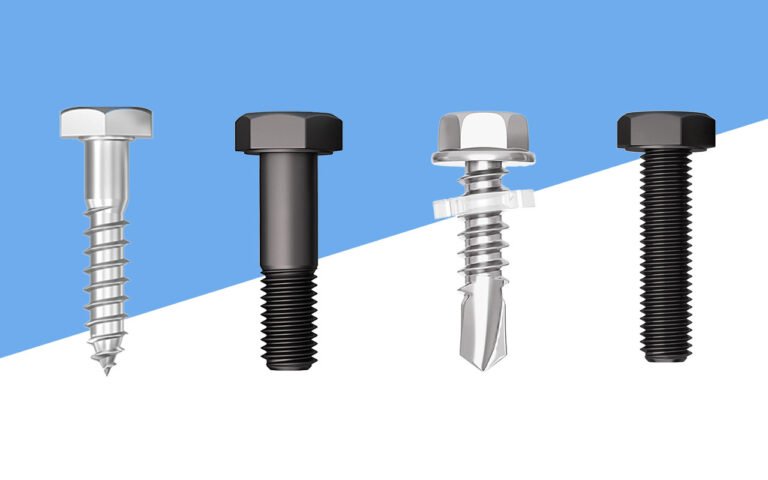
A threaded rod is a metal rod with external threads machined along its entire axial length. Unlike ordinary bolts, it does not have a standard bolt head; instead, both ends can be used with nuts to achieve adjustable, extendable, and cuttable connections.
Functions:
- Offers long-distance threaded connections
- For structural hanging, support, and fixing
- Can be cut to different lengths as needed
- For scenarios where standard bolts cannot be used
Fully Threaded Rod in Metric and Imperial Sizes
| Thread Standards | ISO 724, ISO 268, ISO 68-1, ASME B1.13M, ASME B1.1, BS 3643,BS 84 |
|---|---|
| Inch Sizes | 1/4″ to 8″ |
| Metric Sizes | M6 – M152 |
| Imperial Threads | BSW, ASME, BSF |
| Metric Threads | ASME, ISO |
What Types of Threaded Rods Are There?

A193 B7 Thread Rod

Hollow Thread Rod

Brass Thread Rod

Nylon Thread Rod
Grades of Threaded Rod
| Grades | Grade Marking | Nominal Size |
|---|---|---|
| ASTM A307 Grade A |  Grade A | Size : 1/4″ – 4″ |
| ASTM A307 Grade B |  Grade B | Size : 1/4″ – 4″ |
| ASTM F1554 Grades 36, 55, and 105 |  Grades 36 | Size : 1/4″ – 4″ |
 Grades 55 | Size : 1/4″ – 2″ | |
 Grades 105 | Size : 1/4″ – 3″ | |
| ASTM A449 |  ASTM A449 | Size : 1/4″ – 1″ |
| ASTM A193 Grade B7 |  Grade B7 | Size : 1/4″ – 21/2″ |
| ASTM A320 Grade L7 |  Grade L7 | Size : 1/4″ – 21/2″ |
| ASTM A354 Grade BC |  Grade BC | Size : 1/4″ – 21/2″ |
| ASTM A354 Grade BD |  Grade BD | Size : 1/4″ – 21/2″ |
| SAE J429 Grades 2, 5, and 8 |  Grade 2 | Size : 1/4″ – 21/2″ |
 Grade 5 | Size : 1/4″ – 3/4″ | |
 Grade 8 | Size : 1/4″ – 11/2″ | |
| Stainless Steel |  Grade B8 Class 1 | Size : All |
 Grade B8M Class 1 | Size : All | |
 Grade B8 Class 2 | Size : Up to 3/4 | |
 Grade B8M Class 2 | Size : Up to 3/4 |
Features of Threaded Rods
- Adjustable length, customizable
- High strength, reliable connection
- Economical and affordable
- Easy installation
- Wide range of applications
- A variety of surface treatments
Threaded Rod Material Type


Threaded rods are available in a variety of materials and strength grades.
- Carbon steel: Commonly used material, economical; Grades 4.8 / 6.8 / 8.8 / 10.9.
- Alloy steel: Contains elements such as chromium and molybdenum, high strength and high hardness; Grade 12.9.
- Stainless steel: Common grades 304, 316, 316L.
- Copper and copper alloys: Good electrical and thermal conductivity, easy to process.
- Plastics and nylon: Lightweight, corrosion-resistant, and insulating.
- Titanium and aluminum: Lightweight and strong.
Beyond Fastener can also provide threaded rods made of various special materials.
How to Cut a Threaded Rod
Threaded rods are typically available in standard lengths of 1 meter, 2 meters, 3 meters, and 6 meters. Custom lengths are available upon request.
Step 1: Prepare tools
A cold cutting saw, a ruler, a grinding wheel or chamfering tool, and two nuts are used for thread repair.
Step 2: Cutting
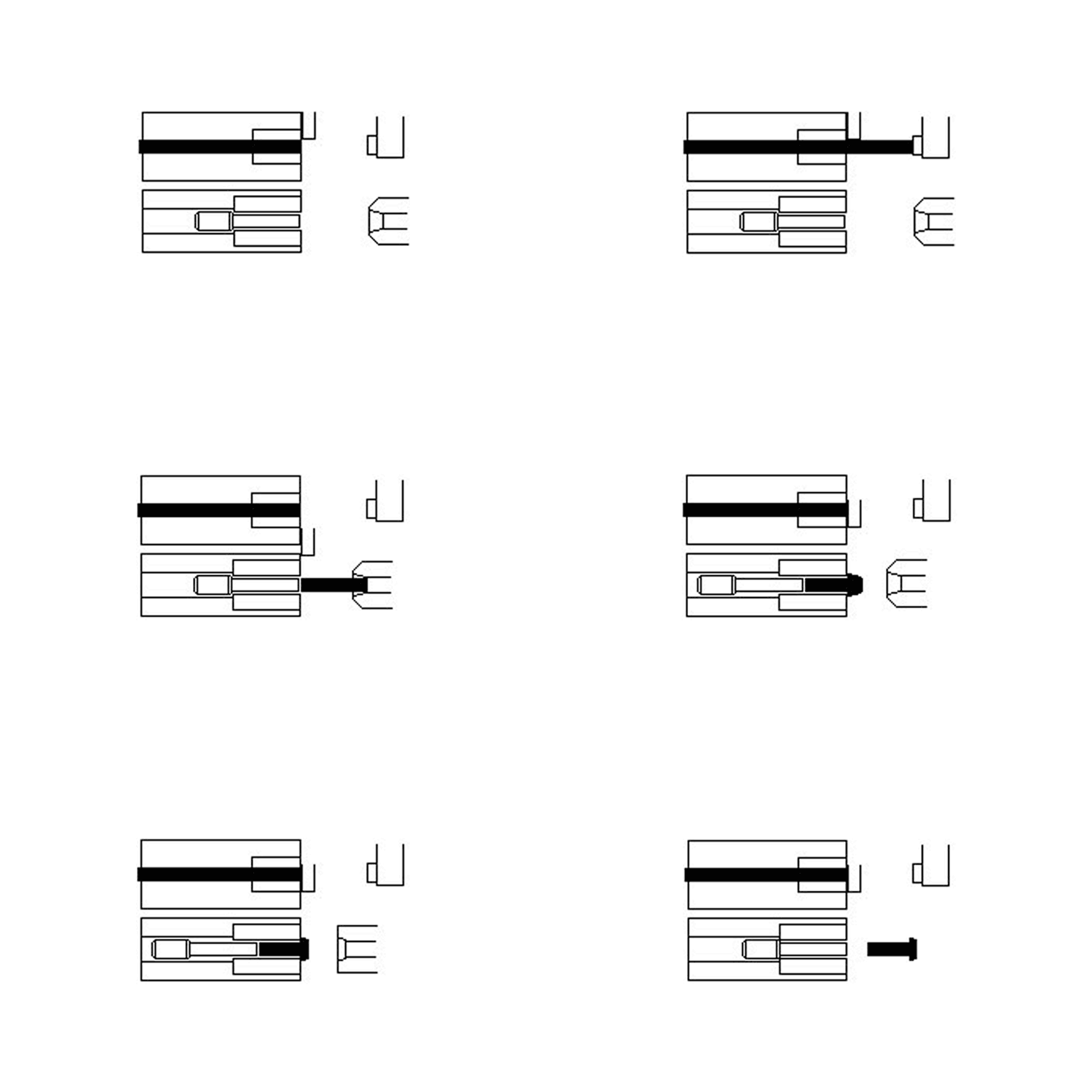
After measuring and marking the required length, screw two nuts onto the threaded rod for positioning and protection. Use specialized cutting equipment to precisely cut the threaded rod, adding beveling or chamfering as needed. Then, use a grinding wheel to remove burrs and rough edges from the cut. Finally, unscrew the nuts in the reverse direction.
What Kind of Threaded Rod Do You Need?
Threaded rods come in a variety of materials, specifications, thread standards, strengths, lengths, thread diameters, surface treatments, and applications. However, if you are unsure of the product you need, please tell us your requirements, and we will customize production for you.
Threaded Rod Surface Coating


- Electro-galvanized: Bright appearance, economical.
- Hot-dip galvanized: Thick coating, strong corrosion resistance.
- Dacromet: Eco-friendly, salt spray resistant, heat resistant, no hydrogen embrittlement.
- Black anodized: Moderate rust resistance.
- Natural stainless steel: Inherently rust-resistant and corrosion-resistant.
Common Dimensions of Threaded Rods
This table shows the DIN 975 metric thread dimensions:
| mm | P |
|---|---|
| M2 | 0.4 |
| M2.5 | 0.45 |
| M3 | 0.5 |
| M3.5 | 0.6 |
| M4 | 0.7 |
| M5 | 0.8 |
| M6 | 1.0 |
| M8 | 1.0 / 1.25 |
| M10 | 1.25 / 1.5 |
| M12 | 1.25 / 1.5 / 1.75 |
| M14 | 1.5 / 2.0 |
| M16 | 1.5 / 2.0 |
| M18 | 1.5 / 2.5 |
| M20 | 1.5 / 2.5 |
| M22 | 1.5 / 2.5 |
| M24 | 2.0 / 3.0 |
| M27 | 2.0 / 3.0 |
| M30 | 2.0 / 3.5 |
| M33 | 2.0 / 3.5 |
| M36 | 3.0 / 4.0 |
| M39 | 3.0 / 4.0 |
| M42 | 3.0 / 4.5 |
| M45 | 3.0 / 4.5 |
| M48 | 3.0 / 5.0 |
| M52 | 3.0 / 5.0 |
Threaded Rod Load Table
Minimum load is based on threaded rods with a property class of 4.6.
| Thread Size | Stress Area (mm²) | Minimum Proof Load (kg) |
|---|---|---|
| M3 | 5 | 112 |
| M4 | 8.8 | 204 |
| M5 | 14.2 | 326 |
| M6 | 20.1 | 459 |
| M8 | 36.6 | 836 |
| M10 | 58 | 1335 |
| M12 | 84.3 | 1937 |
| M16 | 157 | 3598 |
| M20 | 245 | 5617 |
What’s Stronger, B7 Or Grade 8 (A354 Grade BD)?
B7 threaded rods are ideal for environments with high pressure and high temperature effects, such as power plants, chemical plants, oil drilling platforms, boilers, and pressure vessels.
Grade 8 (A354BD) threaded rods are ideal for vehicle manufacturing and maintenance, especially for critical components such as engine mounts, suspension systems, and chassis structures.
| Name | Materials | Tensile Strength | Yield Strength | Heat Resistance |
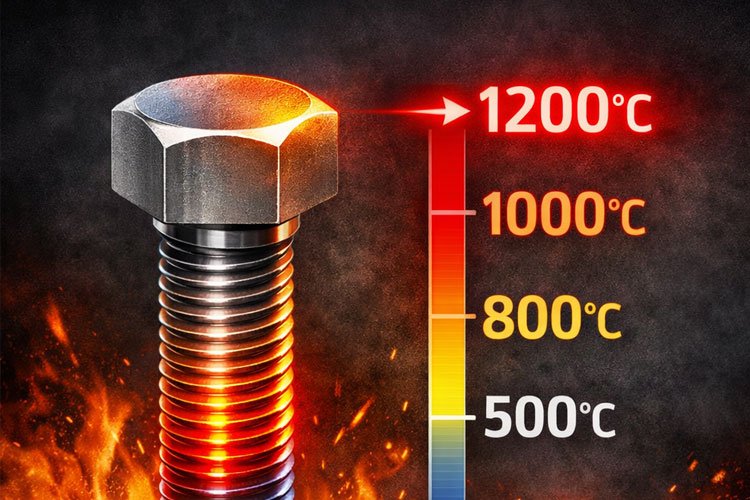
| B7 Thread Rods: | Chromium-molybdenum medium carbon steel | 125,000 psi | 105,000 psi | 1000°F |
| Grade 8 Thread Rods: | Grade A354BD rods are made from Alloy steel | 150,000 psi | 130,000 psi | / |
Applications in Various Industries
- Civil Engineering
Ceiling systems, pipe supports, bridge and tunnel engineering, formwork reinforcement
- Mechanical equipment
Mechanical fixation, equipment foundation connection, industrial architecture support
- Electrical & HVAC
Cable trays, air ducts, pipe rack suspension, and computer room equipment installation
- Furniture assembly
Cabinet connection, home decoration structure reinforcement
- Chemical Engineering & Marine Engineering
Used in combination with chemical adhesives for concrete structures