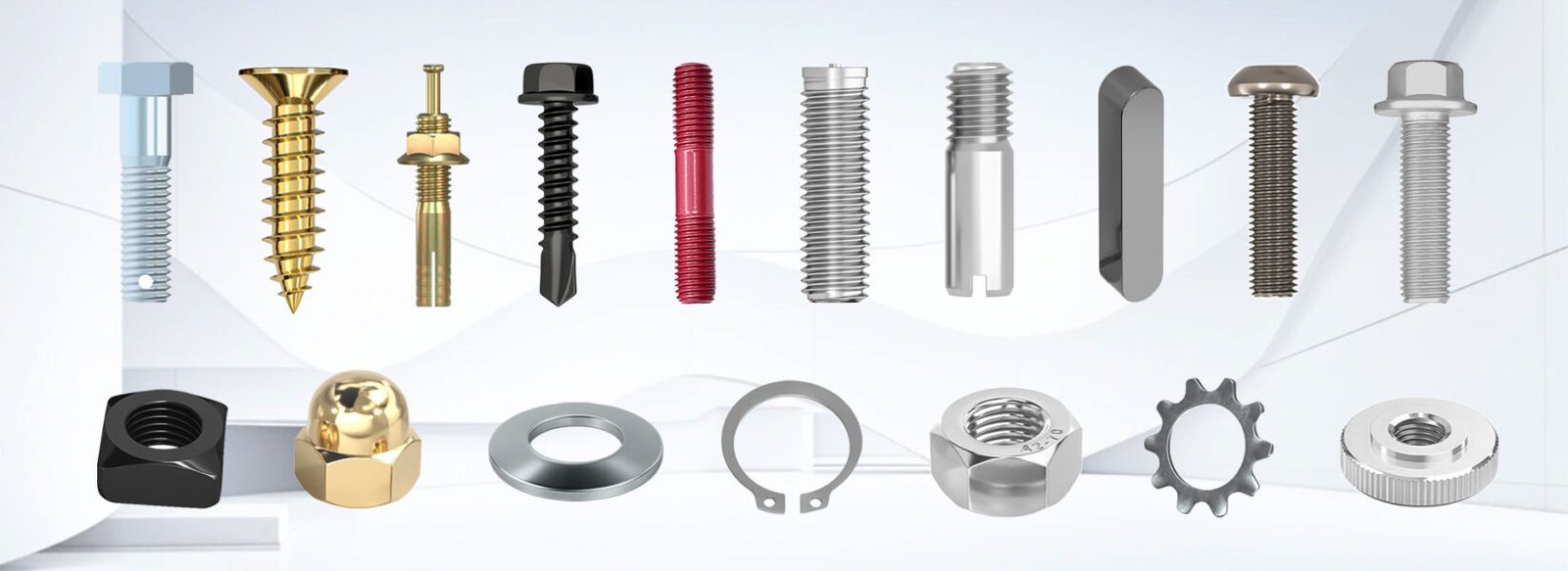
Fasteners are standardized parts used to connect and fix two or more components. Fasteners are known as the “rice of industry” and are characterized by versatility, standardization, and serialization. As a supplier of high-quality industrial fasteners, BD Fastener now shares with you an introduction to fasteners.
Fastener Applications
Fasteners are used in a wide range of applications, spanning a wide range of industries. They are primarily found in construction, bridges, transportation, automotive, aerospace, and mechanical equipment. In addition, fasteners are also needed in fields such as nuclear energy, photovoltaics, electricity, marine, mining, medical and petrochemical. Fasteners are also essential tools for making furniture, decorations, and various small projects.
What Are the Standards for Standard Fasteners?
Standards Are Specifications, And Each Country and Department Has Its Own Standards.
| Standard Classification | Standard Name |
| International Standards | ISO — International Organization for Standardization; EN — European Standards. |
| National Standards | DIN —— German National Standards; AS —— Australian Standards; BS —— British Standards; ANSI —— American National Standards Institute; GB —— Chinese National Standards (Guobiao); JIS —— Japanese Industrial Standards. |
| Association Standards | ASTM —— American Society for Testing and Materials; ASME —— American Society of Mechanical Engineers; SAE —— Society of Automotive Engineers. |
| Industry Standards | IFI —— Industrial Fasteners Institute (USA); FIJ —— Fasteners Institute of Japan. |
What Types of Fasteners Are There?
By thread: Externally threaded fasteners, internally threaded fasteners, and non-threaded fasteners.
Externally threaded fasteners: Bolts, studs, screws, wood screws, self-tapping screws, and high-strength fastener assemblies (bolts).
Internally threaded fasteners: Nuts and high-strength fastener assemblies (nuts).
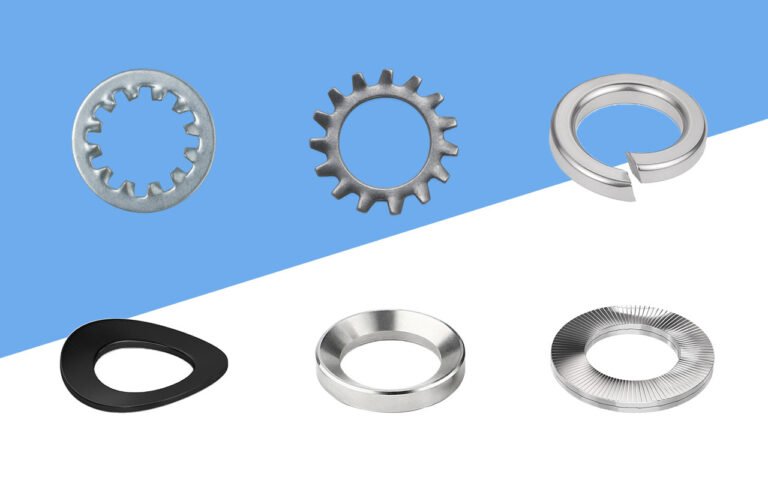
Non-threaded fasteners include washers, pins, rivets, retaining rings, welds, and high-strength fastener assemblies (washers).
By mechanical properties: Low strength, medium strength, and high strength.
By material: Low carbon steel, medium carbon steel, low carbon alloy steel, and medium carbon alloy steel.
By standard: Metric standard, American standard, Imperial standard.
1. Bolts
Bolts are generally used in conjunction with nuts to tighten parts by turning the nuts. They consist of two parts: a head (hexagonal, square, T-shaped, U-shaped, etc.) and a shank (a cylindrical body with external threads). Used to fasten and connect two parts with through holes. This type of connection is called a bolted connection.
2. Screws
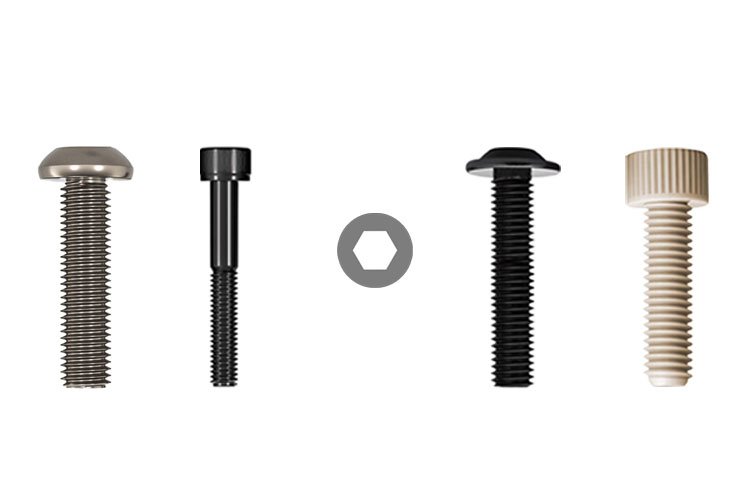
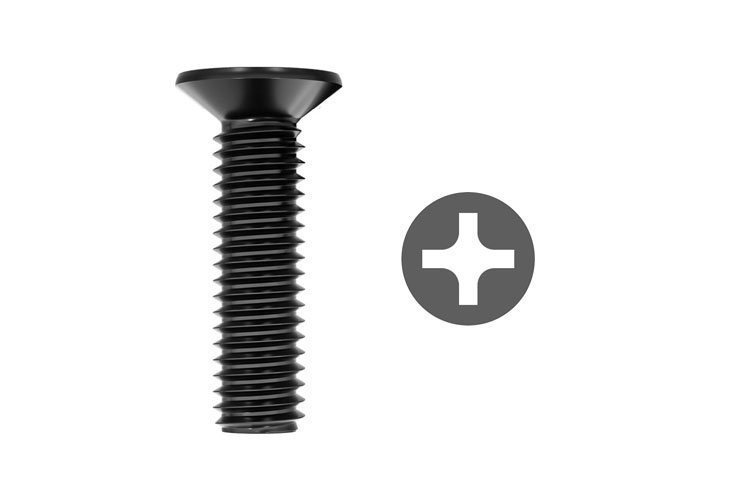
Screws typically don’t require a nut. They consist of a head and a shank. According to their uses, they are divided into machine screws, set screws and special purpose screws.
- Machine screws are used to fasten a part with an internal threaded hole to a part with a through hole. This type of connection is called a screw connection or a removable connection and can also be used with a nut.
- Set screws are used to fix the relative positions between parts.
- Special purpose screws such as eyebolt screws for lifting purposes.


3. Studs
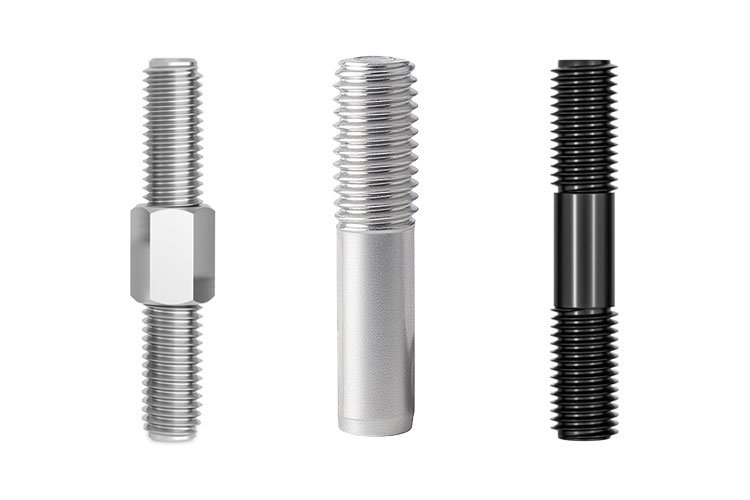
A stud has no head and is externally threaded on both ends. When a stud is connected, one end is screwed into a part with an internally threaded hole, the other end is passed through a part with a through hole, and then a nut is screwed on. This type of connection is called stud connection or removable connection. It is used for connecting parts with large thickness, requiring compact structure, or frequent disassembly, and can not be used in the case of bolt connection.

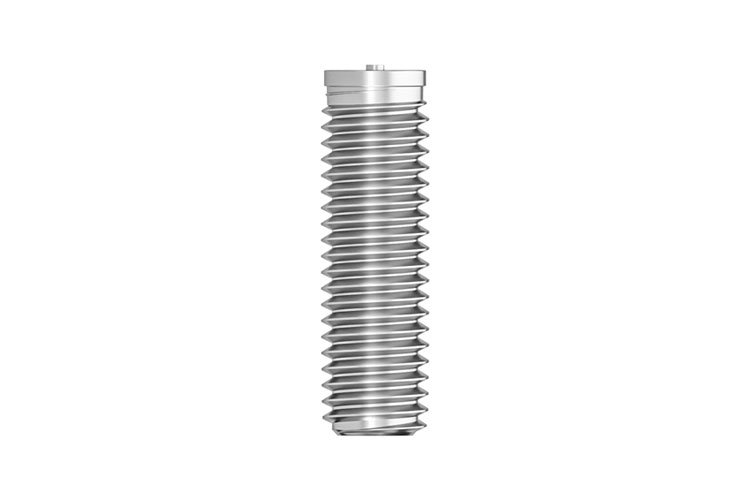
4. Nuts
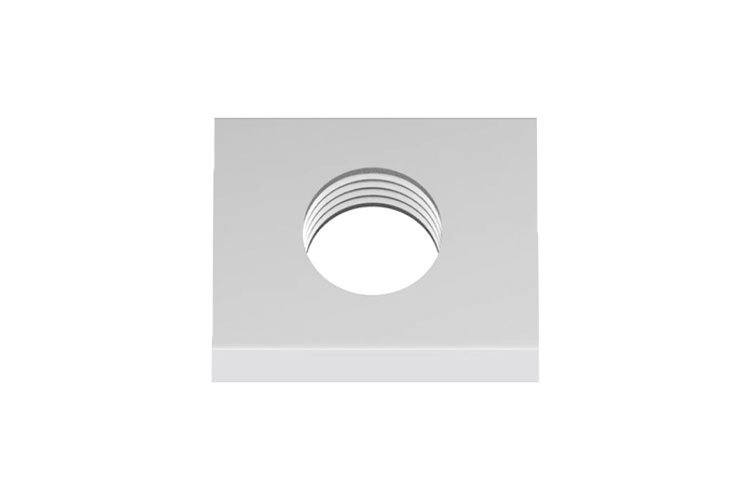
Nuts have an internal threaded hole and are generally flat hexagonal in shape, but can also be square, round, butterfly, or T-shaped. They fit studs, bolts, or machine screws and are used to connect two parts together.
5. Tapping Screws
Self-tapping screws are similar to machine screws, but the threads on the screw are specialized self-tapping threads that are wide and sharp. It is used for fastening connections between two thin metal plates, plastics, etc. These screws have a high degree of hardness and can be screwed directly into small, pre-drilled holes in the material, which can form internal threads in the holes. This is a removable connection.
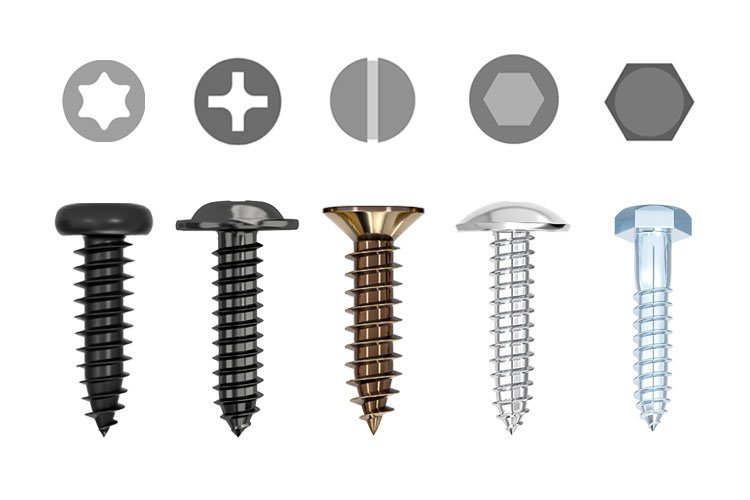
6. Wood Screws
Wood screws have wood-specific sharp threads on the screw, which can be screwed directly into a wood component. They are used to fasten a metal (or non-metallic) part with a through-hole to a wooden component. This form of connection is also a removable connection.

Metric Steel Hex Washer Head Screws for Wood

Decorative Pan Head Wood Screws for Furniture
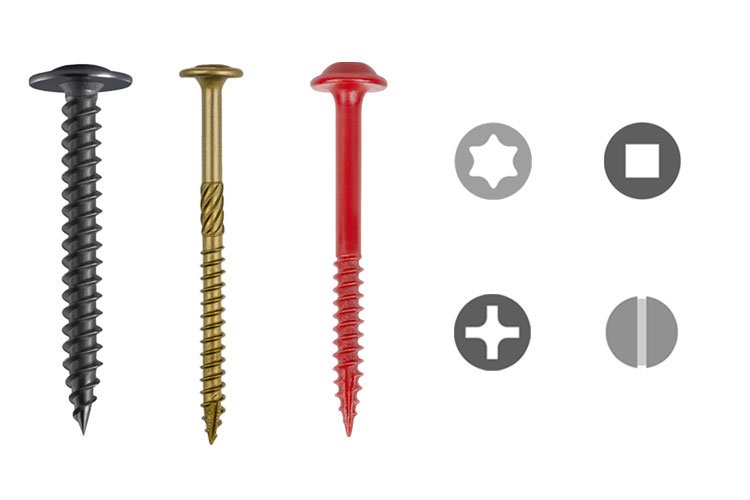
Flanged Rounded Head Screws for Wood

Flat CSK Head Screws for Wood
7. Washers
8. Self-Drilling Screws
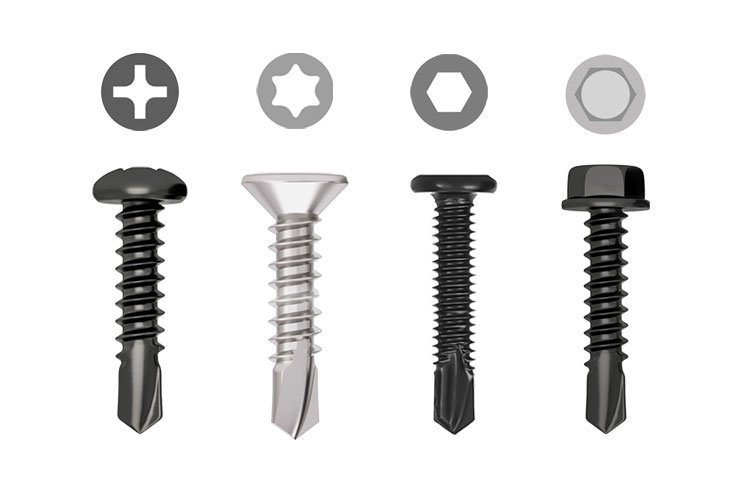
Self-drilling screws have a drill-like cutting end (similar to the tip of an electric drill bit), which allows them to be drilled, tapped and locked directly during the fastening process. Compared with ordinary self-tapping screws, self-drilling screws do not require pre-drilling, which is convenient and fast.
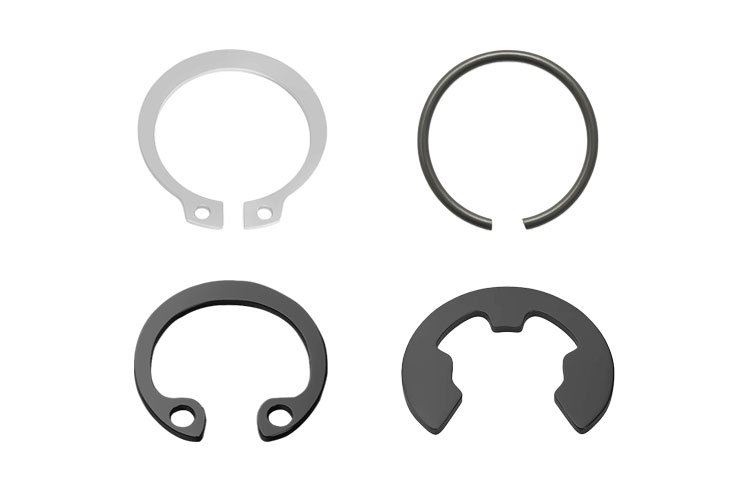
9. Circlips/Retaining Rings
Retaining rings are installed in the shaft grooves or hole grooves of machines and equipments, and their function is to prevent the parts in the shafts or holes from moving from side to side. Types of retaining rings include external rings for shafts, internal rings for holes, and open rings.
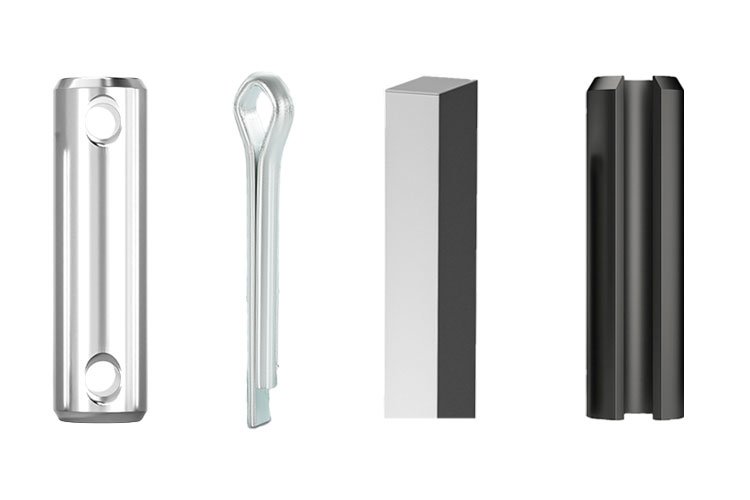
10. Pins and Machine Keys
Industrial pins and keys are used to locate parts, connect, fix, transmit power or lock fasteners.
11. Rivets
A rivet consists of two parts, the head and the shank, and is used to fasten the connection of two parts with through holes. This type of connection is called a rivet connection and is a non-removable connection.
12. Assemblies and Connection Pairs
An assembly is a set of fasteners, such as machine screws, bolts, self-tapping screws, and a flat washer (or spring washer, lock washer). Examples include high-strength fastener joints (large hexagonal head bolts) and non-threaded high-strength fastener joints.
13. Welding Fasteners
Welding fasteners include weld nuts, weld screws, and weld studs.
Weld studs are high-strength fasteners consisting of a shank and a head (or no head). There are several types of weld studs.
- By shape: fully threaded studs with cylindrical heads, half-threaded studs, internally threaded studs, and unthreaded studs;
- By weld: arc weld studs, aluminum arc weld studs, refractory weld studs, and capacitive discharge (CD) weld studs.
14. Non-standard Fasteners
Non-standard fasteners are those that do not conform to international or national standards (such as DIN, ISO, GB, ANSI, and JIS).
They are usually custom-made according to customer needs, special working conditions or structural designs, and have differences in size, structure, material, surface treatment, etc.
- Customization: Manufactured to drawings or samples.
- Flexibility: Not restricted by standards.
- Versatility: Oversized dimensions, extended lengths, specialized threads, unique head designs, or composite structures.
15. Special-Shaped Fasteners
Special-shaped fasteners refer to fasteners with special structural shapes that are different from conventional round or hexagonal standard parts.
They have special head shapes, special-shaped rods, assemblies, etc., which are used for anti-theft, anti-loosening, decoration or special connection methods.
In short, fasteners = bolts + screws + nuts + washers + pins and keys + rivets + other standard parts + non-standard customized parts + special-shaped fasteners.
How Are Fasteners Manufactured?
There are three common manufacturing processes for fasteners:
Cold Forging Process
At room temperature, precisely cut metal wire (coil) is placed into the die of a cold heading machine. Intense pressure (forging force) causes it to plastically deform within the die cavity, extruding it into the desired shape (such as a bolt head or threaded shank).
It is suitable for manufacturing small and medium-sized fasteners in sizes from M6 to M24, up to 200mm in length, and in low-, medium-, and high-strength performance grades. It is an efficient, economical, and advanced production method.
Advantages:
- Highly efficient and material-saving, no cutting process required, cold forging at room temperature.
- High material utilization, but with high requirements for material properties and quality.
- High production efficiency, suitable for mass production.
- Cold-forged fasteners offer a smooth surface finish, tight manufacturing tolerances, consistent quality, and a neat appearance.
Hot Forging Process
Hot forging is used when parts are too large or the material is too hard to form at room temperature.
The bar or billet is heated in a heating furnace (such as a medium-frequency induction furnace) to above the recrystallization temperature (typically 900-1100°C), softening it and increasing its plasticity. It is then quickly transferred to a hot forging press or hammer for forging.
Products include high-strength fasteners in strength grades 4.8, 5.6, 8.8, 10.9, 12.9, B7, L7, and high-strength grades such as 10.9HV, 10.9HR, 10.9S, A325/M, and A490/M for steel structures.
Features
- Hot forging, utilizing advanced medium-frequency heating and punching equipment, is pollution-free and highly efficient.
- Hot forging covers a wide range of specifications, including medium-carbon steel and medium-carbon alloy steel, meeting existing standard performance grade requirements.
- Heating temperature controlled between 900–1100°C minimizes scale formation, with dimensional accuracy meeting standard specifications.
- Using auxiliary cutting processing, it can finally complete the product with complex structure.
Machining
Using lathes, milling machines, CNC machines, etc., material can be removed from bars or forgings by cutting to produce any shape.
This method can produce products with extremely high precision and a high finish. It can also be used to create threads on hot-forged or cold-headed blanks.
How to Source High-Quality Fasteners?
BD Fastener is a one-stop manufacturer, supplier, and exporter of industrial fasteners and fixings. We offer a full range of standard fasteners, including both imperial and metric fasteners. We can supply according to DIN, ISO, ANSI, GB, JIS, and other standards. We also support OEM customization, non-standard parts customization, and special-shaped parts customization. If you have any fastener needs or technical questions, please contact the professional team at BD Fastener for solutions.
Benefits
- Complete Product Range: A one-stop source for nearly all standard and custom fasteners.
- Quality Assurance: Sampling, gauge inspection, measurement, comparison, and testing; providing quality documentation such as material certificates, hardness tests, and salt spray tests.
- Professional Consulting: We can recommend the most suitable materials (such as carbon steel, stainless steel, alloy steel, titanium alloy, copper, etc.) and surface treatments (such as galvanizing, nickel plating, Dacromet, hot-dip galvanizing, etc.) based on your application (e.g., corrosion resistance, high strength, high temperature resistance, etc.).
- Custom Manufacturing: Providing customized production services based on provided drawings.