304 and 410 stainless steel fasteners are more common fasteners, because these two materials are more applications. But many people are not clear about the two stainless steel material in the end what is the difference, here we are from the chemical elements, mechanical properties, corrosion resistance, and the application of the field of these aspects and you say in detail.
Chemical Elements of Stainless Steel
Typically, 410 stainless steel is less expensive than 304 stainless steel, making it an affordable option. This is because 410 stainless steel does not contain nickel, a precious metal, in its main composition.
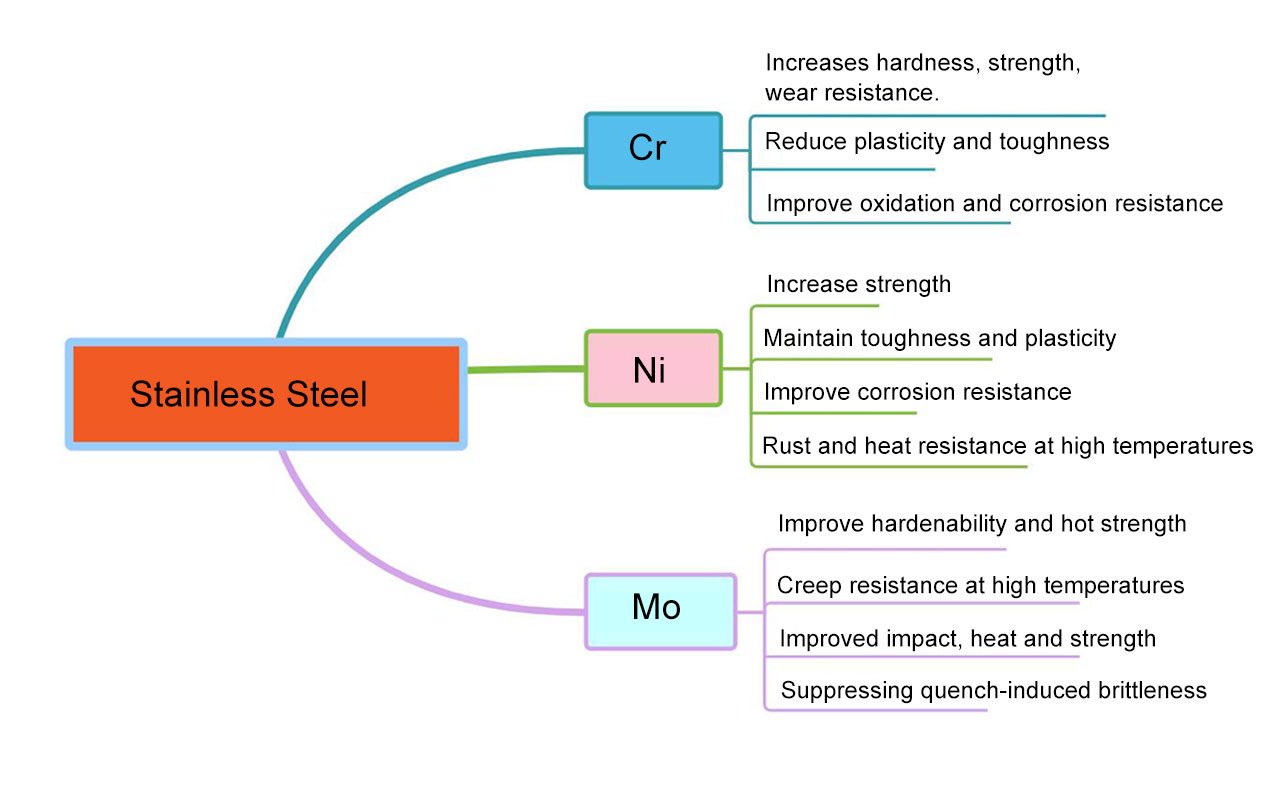
304 stainless steel belongs to austenitic stainless steel, its corrosion resistance and plasticity, mainly by chromium (Cr) 18%-20%, nickel (Ni) 8%-10.5% and a small amount of carbon (C), manganese (Mn) composition, carbon up to 0.08%, manganese up to 2%.
410 stainless steel belongs to the martensitic stainless steel, high hardness and strength, corrosion resistance is relatively poor, mainly by chromium (Cr) 11.5%-13.5%, carbon (C) 0.08%-0.15% and a small amount of nickel (Ni), molybdenum (Mo), nickel up to 0.6%, molybdenum up to 0.75%.
Mechanical Properties
304 stainless steel exhibits higher elongation and ductility, emphasizing flexibility and impact resistance, making it more suitable for forming or bending processes.
Grade 410 stainless steel exhibits high tensile strength and hardness, but its elongation is relatively low, meaning it has poor toughness. It is suitable for applications requiring high load-bearing capacity and wear resistance.
Corrosion Resistance
304 stainless steel contains higher levels of nickel and molybdenum, resulting in superior corrosion resistance, particularly against corrosive media. It is suitable for outdoor, marine, or chemical environments.
Grade 410 stainless steel has lower nickel and molybdenum content, resulting in inferior corrosion resistance compared to other stainless steels. It is more suitable for dry, low-corrosion indoor environments.
Processability
The toughness of 304 stainless steel screws makes them less prone to breaking during drilling, though they may require more force when tapping into harder materials. Due to their higher hardness, 410 stainless steel screws cut into hard materials more easily during self-drilling, but improper handling may cause brittle fracture.
Fields of Application
By considering their chemical composition, mechanical properties, and corrosion resistance, one can determine the appropriate applications for 304 stainless steel and 410 stainless steel.
Corrosion-resistant and malleable 304 stainless steel is suitable for building exteriors, marine equipment, pressure vessels, medical equipment, food processing equipment, chemical equipment and other fields.
High strength and high hardness of 410 stainless steel is suitable for wear resistance and strength requirements of the field, such as machinery manufacturing, automobile manufacturing, cutting tools, bearings, valves and other fields, the high corrosion resistance requirements of the occasion is not suitable for 410 stainless steel.
Common Types of Stainless Steel Fasteners
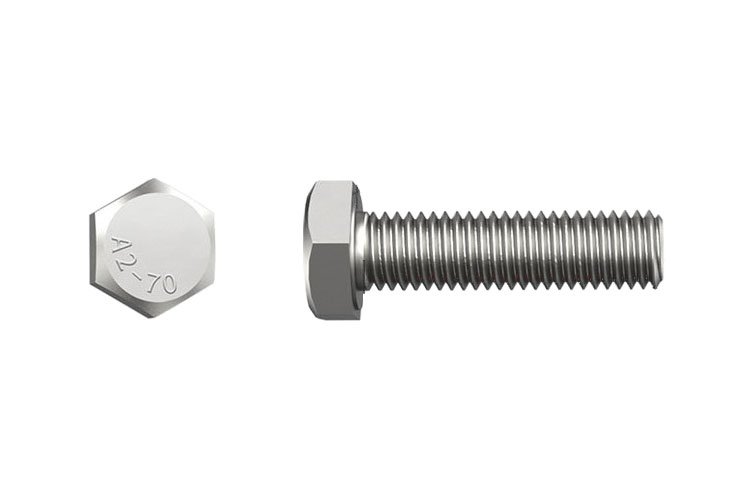
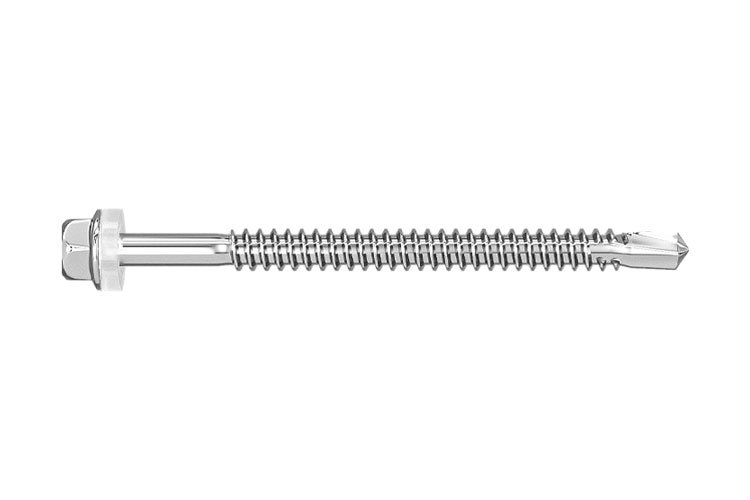
410 Stainless Steel Hex Self-Drilling Screw
External hex head with a drill-point tip.
Standard: DIN 7504K
Recommendations for Selection
When choosing, it is necessary to evaluate according to the specific environment: if rust prevention and durability are important, give priority to 304 stainless steel.
If you are looking for high strength and wear resistance, and the environment is dry, 410 stainless steel is more economical and practical. Attention to the surface treatment of the screws (e.g. plating) can further enhance performance. Correctly matching the material ensures a secure and long-lasting connection.
M2-M4: Suitable for precision electronics, small appliances, cell phone brackets, eyeglass frames, such as light load structure, such as laptop shell fixing screws are commonly used M3 or M4.
- Advantages: small and delicate, not easy to destroy the shell;
- Note: Don’t use it in the load-bearing position, it is easy to slip or break the wire.
M5-M8: This is the most commonly used “golden range”! Frequently employed in furniture assembly (such as IKEA tables and chairs), metal frame connections, solar panel mounts, and small mechanical equipment.
- M6 bolts are particularly common, offering sufficient strength, moderate size, and excellent value for money.
- We recommend pairing them with bolts rated at least 8.8 to ensure secure fastening.
M10-M16: Designed for heavy-duty applications! Ideal for industrial equipment, building structures, bridge guardrails, large machinery bases, and other scenarios requiring high load-bearing capacity.
- For M12 and larger sizes, heat treatment processes and anti-loosening designs (such as double nuts or spring washers) must be considered.
- During installation, use a torque wrench to avoid over-tightening that could damage the threads.
Though small, screws play a vital role. Choose the right one, and your equipment will be as stable as a mountain; choose the wrong one, and the entire machine could be rendered useless!
Stainless Steel Fastener Supplier
BD Fastener is a professional supplier of metric and imperial fasteners, offering stainless steel fasteners in various specifications and performance grades, including stainless steel screws, stainless steel bolts, stainless steel nuts, stainless steel washers, stainless steel studs, stainless steel pins, and more. If you are seeking a reliable custom fastener supplier, please contact us online.