The selection between flat washers and spring washers depends on specific scenarios. In static or low-vibration applications, prioritize flat washers to protect surfaces and facilitate disassembly. For high-vibration or dynamic load scenarios, combine both types to leverage the anti-loosening benefits of spring washers and the protective properties of flat washers. In special environments, consider material temperature resistance and corrosion resistance, or adopt alternative solutions such as lock nuts. Detailed selection strategies are outlined below:
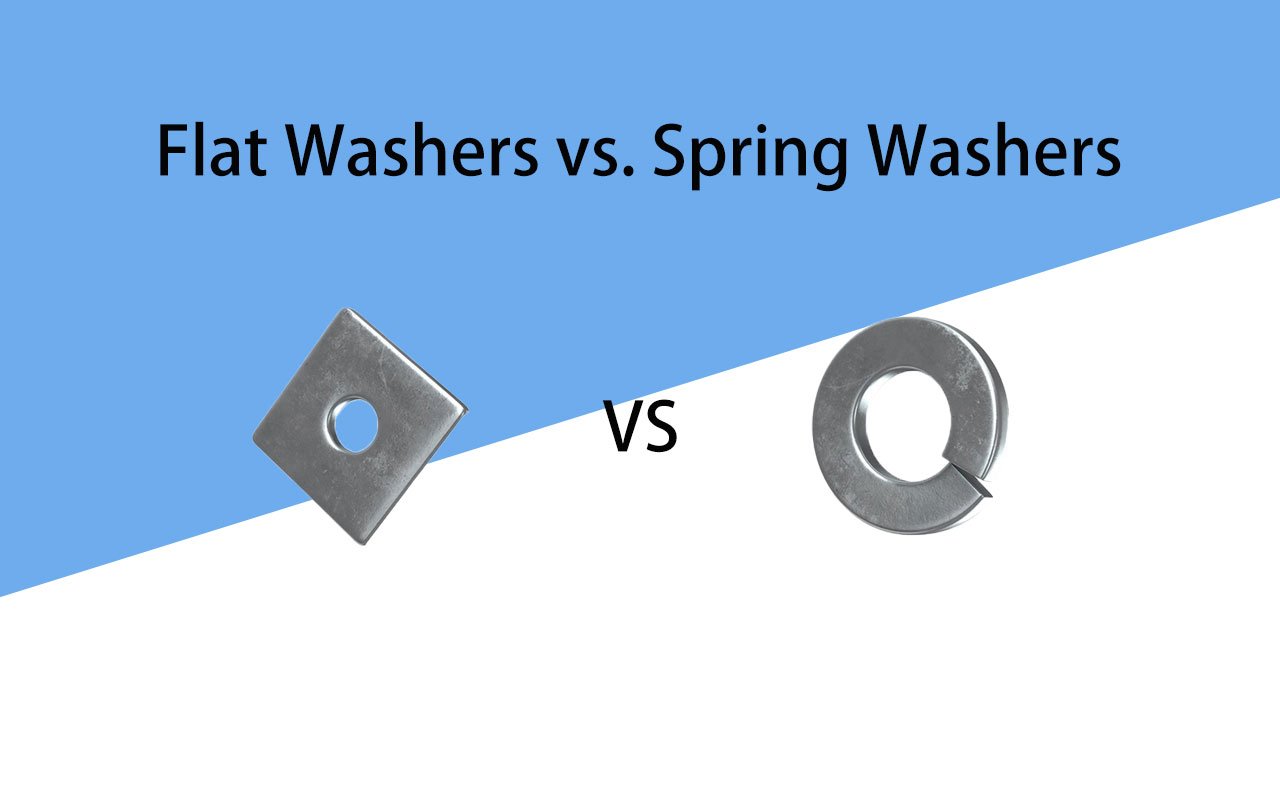
What Is a Flat Washer?
Flat washers or plain washers are circular or square metal washers with a hole in the center.It is stamped from sheet metal, featuring a simple structure with no elastic openings, and is typically manufactured to standards such as ISO 7089, ISO 7090, DIN 125, and ANSI B18.22.1. Flat washers are sized to match bolts or screws. They are manufactured from materials including carbon steel, stainless steel, aluminum alloy, copper, plastic, or other alloys.
What Is the Function of a Flat Washer?
- Distribute the pressure of the bolts across the connected components to prevent deformation of soft materials (such as aluminum, copper, and plastic) or damage to the surfaces of precision equipment.
- Reduce torque loss, enhance ease of disassembly, and extend bolt service life.
Types of Flat Washers

Zinc-Plated Flat Washer

Nylon Flat Washer
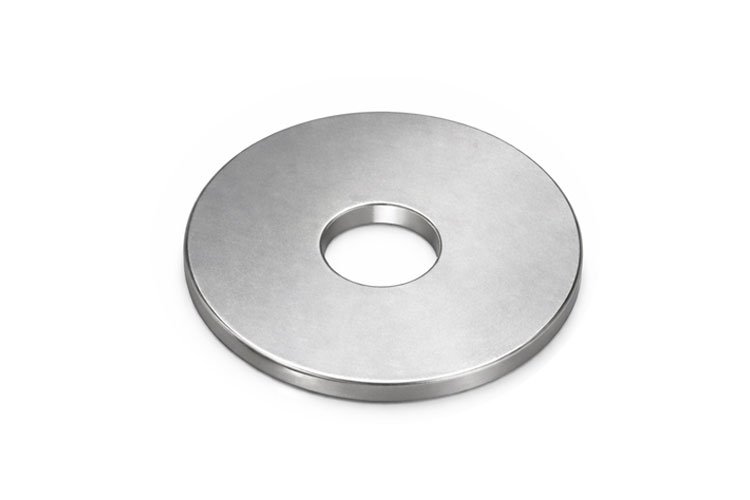
Titanium Fender Flat Washer

Heavy-Duty Flat Washer

Stainless Steel Flat Washer
What Are the Uses of Flat Washers?
- Soft material connections: such as electronic device enclosures and plastic components, to prevent indentation.
- Precision Equipment: Optical instruments, high-precision measuring devices—prevent surface scratches.
- Frequent Disassembly Scenarios: Removable fixtures, modular equipment—reduce friction resistance.
- Low-Vibration or Static Connections: Wooden furniture, light-load brackets—where anti-loosening requirements are minimal.
What Is a Spring Washer?
Spring washers are typically open-type, wave-type, or disc-type, featuring axial deformation capability. Common standards include DIN 127 and DIN 6796.
What Is the Function of a Spring Washer?
- Provides axial preload through elastic deformation to counteract loosening caused by vibration.
- When bolt clamping force decreases, a portion of the preload is restored through elastic recovery.
Types of Spring Washers

Stainless Steel Spring Washer
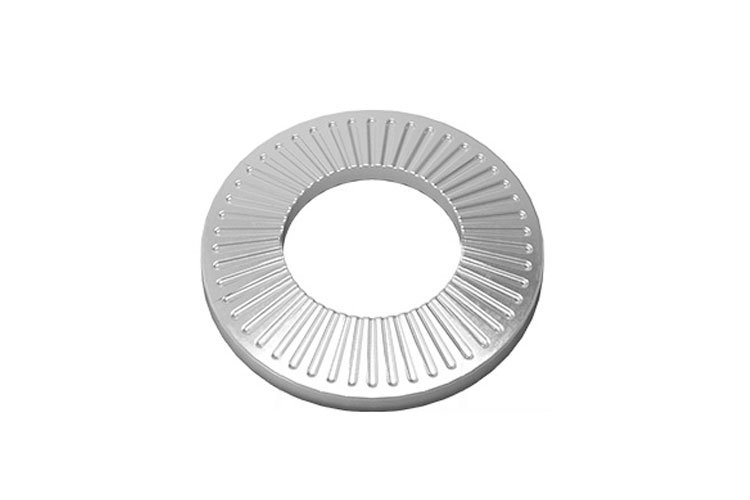
Knurled Disc Spring Washers
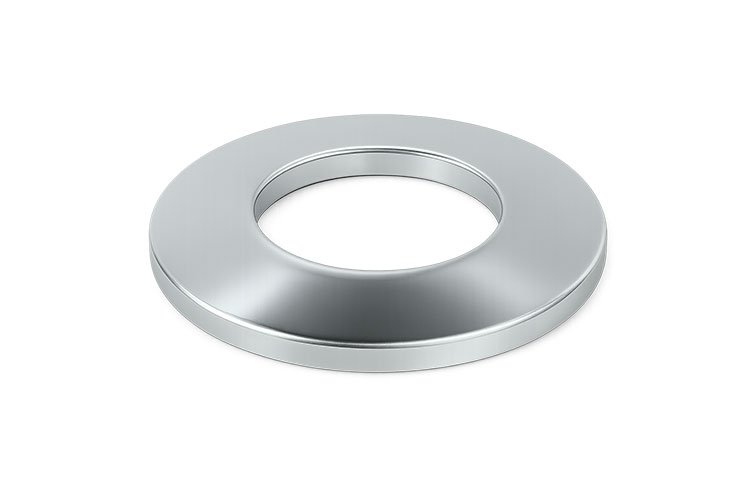
Disc Spring Washer

Wave Spring Washer

Double Helical Spring Washer
What Are the Uses of Spring Washers?
- High-vibration environments: Engines, compressors, bridge structures.
- Dynamic load equipment: Loaders and vibrating screens require continuous preload compensation.
- Key connection parts: Pressure vessels, wind turbine blade bolts.
Flat Washer vs Spring Washer
| Characteristics | Flat Washer | Spring Washer |
|---|---|---|
| Function | Increase the load-bearing surface area and protect the surface. | Cushioning and shock absorption, providing elasticity to prevent loosening. |
| Advantages | Even pressure distribution, high-precision connection. | Effectively address dynamic vibration environments |
| Disadvantages | No anti-loosening or anti-vibration effect. | Vulnerable contact surfaces may reduce connection rigidity. |
Note: In shear bolt connections (where shear force is the primary load), spring washers should be used with caution to avoid reducing the rigidity of the connection and thus creating safety risks.
Combination Selection Strategy
Installation and Specifications
- Sequence: Connected component → Flat washer → Spring washer → Nut/Bolt head.
- Requirements: The spring washer opening must face the nut and avoid direct contact with the surface of the connected components. The inner diameter of the flat washer should be slightly larger than the bolt diameter (0.5–1 mm), while its outer diameter must cover the support surface of the connected components.
Materials
- Flat washers, spring washers, and bolts must be made of the same material (e.g., carbon steel bolts paired with stainless steel washers are prone to rust).
- The spring washer must be made of high-strength spring steel (such as 65Mn) to ensure stable elasticity.
Torque Control
- Operate according to standard torque specifications: Avoid over-tightening (which causes plastic deformation and failure of the spring washer) or under-tightening (which fails to provide effective preload).
- Stepwise tightening: Critical connections (such as pressure vessels) require stepwise tightening to ensure even distribution of force.
Project Case Studies
- Automotive Engine
Flat washer + spring washer combination resists vibration and protects the aluminum cylinder block.
- Wind turbine Blade Bolts
Utilize high-strength flat washers and weather-resistant spring washers to withstand harsh outdoor environments.
Selection for Various Operating Conditions
| Application | Solution | Note |
| Static/Low Vibration | Use flat washers alone | Protects the surface, facilitates disassembly, and is cost-effective |
| High vibration/dynamic load | Flat washer + spring washer combination | Anti-loosening + protection, balancing reliability and surface integrity |
| High-temperature environment | High-temperature resistant flat washer + stainless steel spring washer | Prevent material failure and loss of elasticity. For connecting engine exhaust manifolds and high-temperature pipes. |
| Corrosive environment | Corrosion-resistant coatings (such as Dacromet plating) or stainless steel materials | Prevents rust and extends service life. Used in offshore platforms and chemical processing equipment. |
| High-precision equipment | Lock Nut/Flange Face Bolt | The elasticity of the spring washers may cause the connection to loosen; therefore, adhesive, locknuts, or flange bolts should be used instead. Used in semiconductor equipment and precision machine tools. |
Note: By appropriately selecting combinations of flat washers and spring washers, the reliability, durability, and cost-effectiveness of bolted connections can be significantly enhanced to meet diverse industrial application requirements.
BD Fastener offers flat washers and spring washers in a wide range of standards, sizes, and specifications to meet diverse application requirements. Contact us for more product information!